
A first sleepover can feel exciting to a child and surprisingly complicated to the adults. The most useful preparation is often ordinary: who will be there, where everyone will sleep and what happens if the child wants to come home.
Start with the child’s willingness. Excitement and uncertainty can coexist, and agreeing to attend should not remove the option to change their mind. Avoid presenting an early collection as a failure or something that will disappoint the host.
Have the adult conversation first
Speak directly with the responsible adult about supervision, other people in the home, sleeping arrangements and contact details. Discuss relevant allergies, medicines and support needs privately. Agree who can collect the child and how changes will be communicated.
The NSPCC’s guidance on safer activities and events includes supervision and overnight arrangements. It is written for organised activities, but its emphasis on clear responsibilities provides useful background when thinking through a family visit. A private sleepover still requires judgement about the particular people and setting.
Make the exit plan easy to use
Tell the child how to contact you and what they can say if they want help or collection. Keep the plan simple enough to remember. Make sure the host knows that a request to come home will be taken seriously and does not need an elaborate explanation.
Agree practical expectations around devices, films, bedtime and any activities outside the home. Do not assume that two families use the same rules. Differences are easier to discuss before the evening than after a child is already uncomfortable.
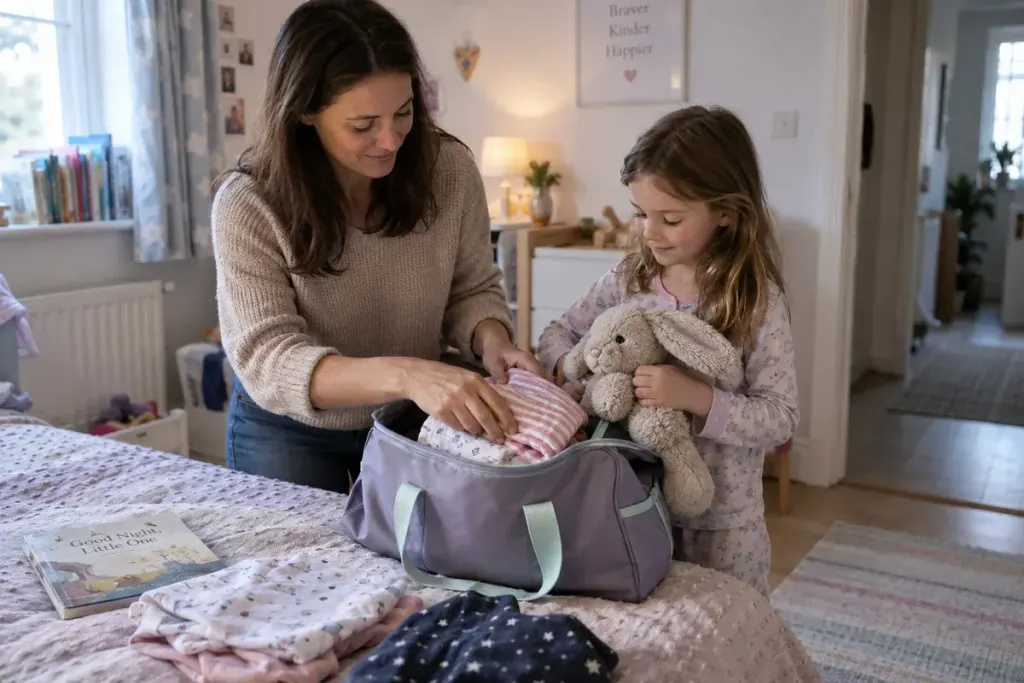
- Pack familiar sleepwear and a comfort item if wanted.
- Label essential belongings without sharing unnecessary information.
- Provide clear instructions for relevant health needs.
- Confirm the collection time and a reachable adult contact.
Afterwards, ask open questions about the experience rather than demanding a positive report. “What was it like?” leaves more room than “You had fun, didn’t you?” Listen calmly if something felt awkward or worrying.
A successful first sleepover is not defined by staying until morning. It is an experience in which the child feels heard and the adults understand their responsibilities. Sometimes a shorter evening visit is the more comfortable first step, and that can still be a special occasion.