
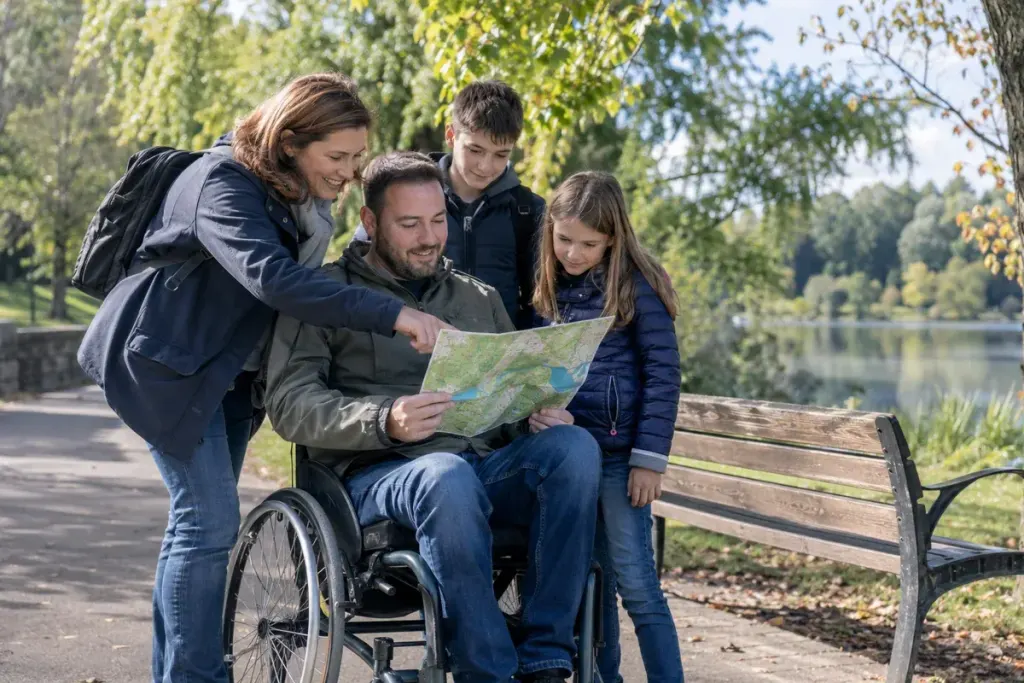
A family day out often begins with a list of attractions. Try beginning with where everyone can pause. A seat, a quieter area and a straightforward route home can make the rest of the plan easier to enjoy. Rest is part of the day, not a reward for finishing everything on the itinerary.
Ask the people coming what would make the outing workable. Needs can differ within the same family and from one day to another. Avoid assuming that a previous successful trip provides a complete plan for the next one.
Check the details behind a promising venue
Look for current information about entrances, toilets, seating, transport and places to step away from crowds. Contact the venue with specific questions when the website is unclear. Accessible is a broad description; a person may need to know about a particular route, surface or facility.
The National Autistic Society’s travel guidance for autistic people and families discusses preparation, calm spaces and time out. These suggestions can inform a conversation, but individual preferences should determine the plan.
Plan a small day with room to grow
Choose one main activity and identify optional extras. Mark a place to rest before and after the busiest part. An illustrative museum visit might include one gallery, a break and a choice about whether to continue. It need not cover the whole building to count as a good visit.
Share the plan in a format that suits those attending: a short written outline, pictures or a conversation. Explain what is certain and what might change. Avoid presenting an uncertain queue time as a promise.
Agree how to change course
Decide how someone can ask for a break and who will manage practical changes. Make leaving early an ordinary option rather than a family disappointment. Keep the transport plan realistic, including the last part of the journey when everyone may be tired.
Afterwards, ask what was comfortable and what created unnecessary effort. A note such as “the café was too noisy, but the courtyard worked well” is useful for the next visit. Do not judge the day only by how many attractions you completed. A flexible outing gives people a way to participate without having to endure the plan unchanged.