
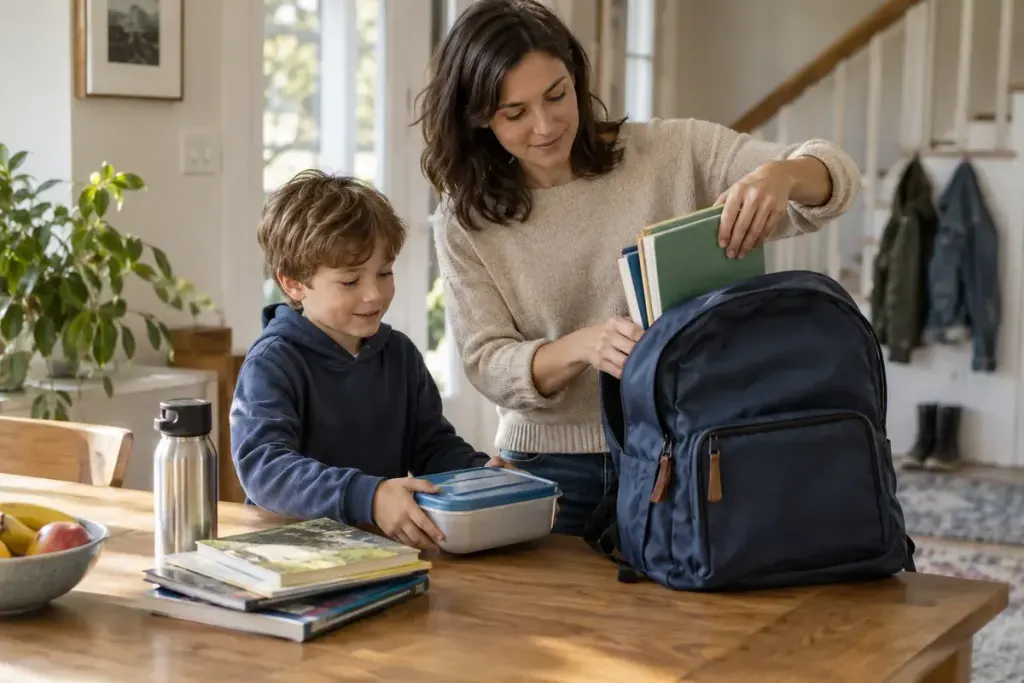
A parent packs the bag quickly because the morning is busy. The child then arrives at school without knowing where anything is. Doing the task together at a calmer time can build familiarity without expecting instant independence.
Start with the school’s actual requirements and the child’s needs. Age, disability, sensory preferences and the day’s activities all affect what support is useful.
Make the contents visible
Lay out the ordinary items and agree a consistent place for each. A small picture list, written list or tactile cue may help, depending on what the child uses comfortably. Keep it short and change it when the school routine changes.
Separate everyday items from occasional ones such as sports kit or a library book. A checklist containing everything that might ever be needed can become harder to use than a simple daily list with one extra reminder.
Hand over one part
Choose a manageable step: placing the lunchbox in its compartment, checking the reading folder or putting the bottle in the side pocket. Demonstrate it, practise together and let the child try with the level of support they need.
Do not turn a forgotten item into evidence that the child is careless. Ask whether the cue was understandable, the item was available and the sequence happened at a realistic time. A routine can fail because its design is difficult, not because someone lacks motivation.
For an illustrative example, the child checks the reading folder in the evening while an adult handles forms and medicines according to school policy. Responsibility is shared deliberately rather than handed over as one large task.
Review after an ordinary week
Ask which step felt easy and which caused frustration. Move frequently needed items to accessible pockets and remove unnecessary weight. Check any school or professional guidance relevant to the child’s bag and equipment.
Keep sensitive documents and medicines in the appropriate adult-managed process. Independence does not mean withdrawing all supervision.
The useful change is gradual: the child knows more about their own belongings, and the adult can step back from one task without leaving a confusing gap. A quieter evening practice often teaches more than an urgent reminder shouted at the front door.