
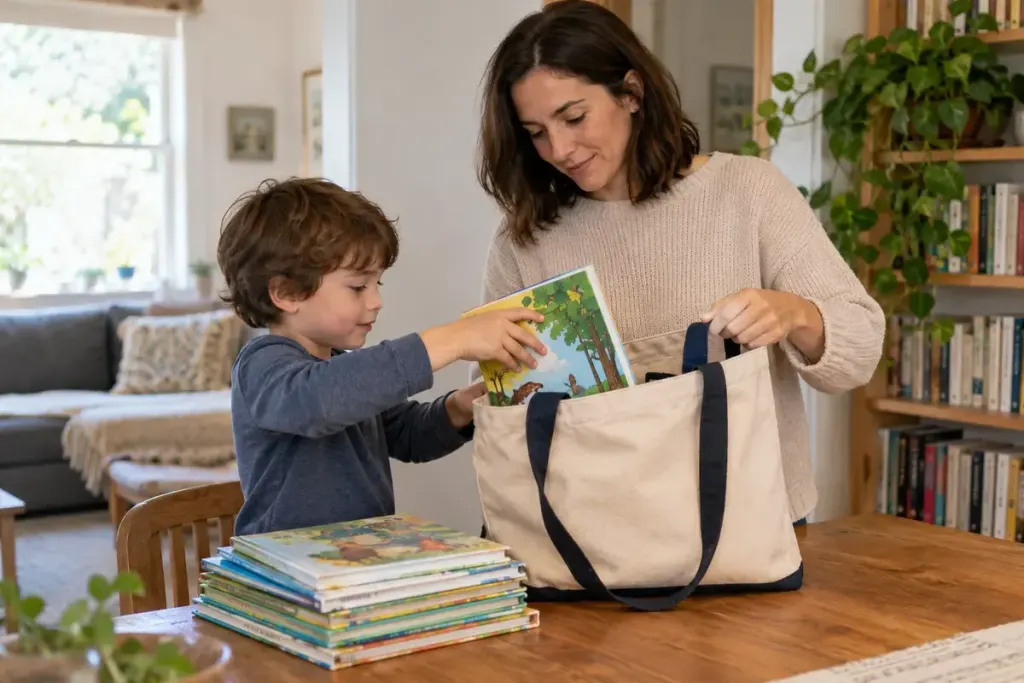
Borrowing books is exciting; returning them can feel like an adult’s administrative task. Giving children a manageable role in the return routine helps connect choosing a book with caring for it and making it available to someone else.
Keep the responsibility appropriate to the child’s age and abilities. An adult still needs to track account details, dates and the library’s current rules. The aim is participation, not anxiety about mistakes.
Give borrowed books a home
Choose a basket or shelf where library books return after reading. Keep it separate from books the family owns if that helps. Before the visit, invite the child to gather the borrowed books and compare them with the account list alongside you.
Look for loose belongings used as bookmarks and check that any accompanying parts are present. If a book is damaged or missing, explain that you will ask library staff what to do. Avoid presenting the library as a place where a child will be punished for admitting a problem.
Make the return visible
At the library, let the child carry a manageable number of books or use the return system with guidance where permitted. Explain that handing a book back and seeing it removed from the account may not happen at exactly the same moment, depending on the system.
Keep any receipt or check the account later as the library advises. If an item still appears borrowed, contact staff with the details rather than assuming the child did something wrong.
Before choosing new books, ask which previous title they would recommend or borrow again. Returning does not have to mean forgetting a favourite; a small reading list can preserve its title.
Repeat the same few steps until the routine feels familiar. Success is a child who knows where borrowed books belong, can help check them and feels comfortable asking for help. The adult’s quiet oversight makes that growing independence possible.