
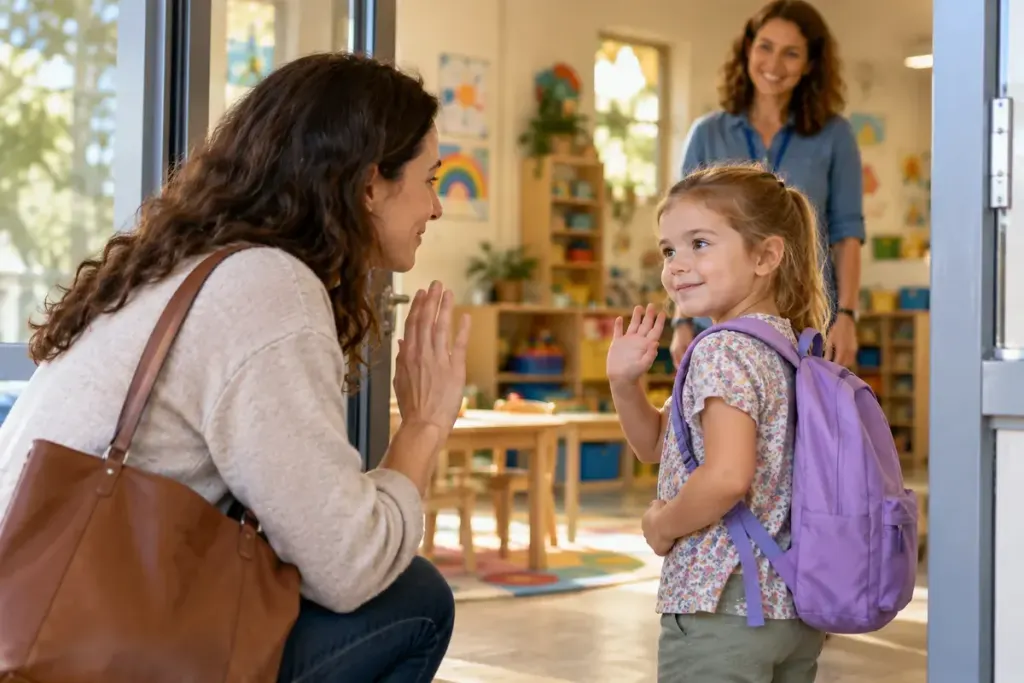
A new dance class or holiday activity can be exciting all week and suddenly feel difficult at the doorway. For a young child, the unfamiliar room, adult and goodbye arrive together. Preparation can make that moment more understandable without promising that every child will settle immediately.
The NHS information on separation anxiety describes separation worries as common in young children and suggests practising short separations with someone familiar. Children differ, so treat that idea as a starting point for a plan with the caregiver, not a deadline for independence.
Make the handover predictable
Before the first session, find out who welcomes children, where the accompanying adult may wait and how staff contact families. Explain the arrangement in words the child understands. “I will come back after the drawing activity” is useful only if that is genuinely when you will return.
At home, rehearse a small routine: put the bag down, greet the adult, share a short goodbye and move to the first activity. A familiar phrase or wave can be easier to remember than a long explanation offered at a busy entrance.
Ask whether a familiar comfort item is appropriate and allowed. Check any practical restrictions in advance so the child does not discover at the door that the promised toy must stay outside.
Listen to what the difficulty is
A child saying “I don’t want to go” may be worried about the goodbye, but may also dislike the noise, not know where the toilet is or feel uncertain about a particular activity. Ask a concrete, gentle question and give them time to answer.
Coordinate with the staff rather than disappearing without a handover or extending the goodbye indefinitely. Agree how they will support the child and when they will call you if the session is not working.
Afterwards, ask about one specific moment rather than demanding a happy verdict on the whole class. If distress is intense, persistent or affecting daily life, discuss it with an appropriate health professional. The aim is a supported experience, not proving that a child can manage a separation on an adult’s preferred timetable.