
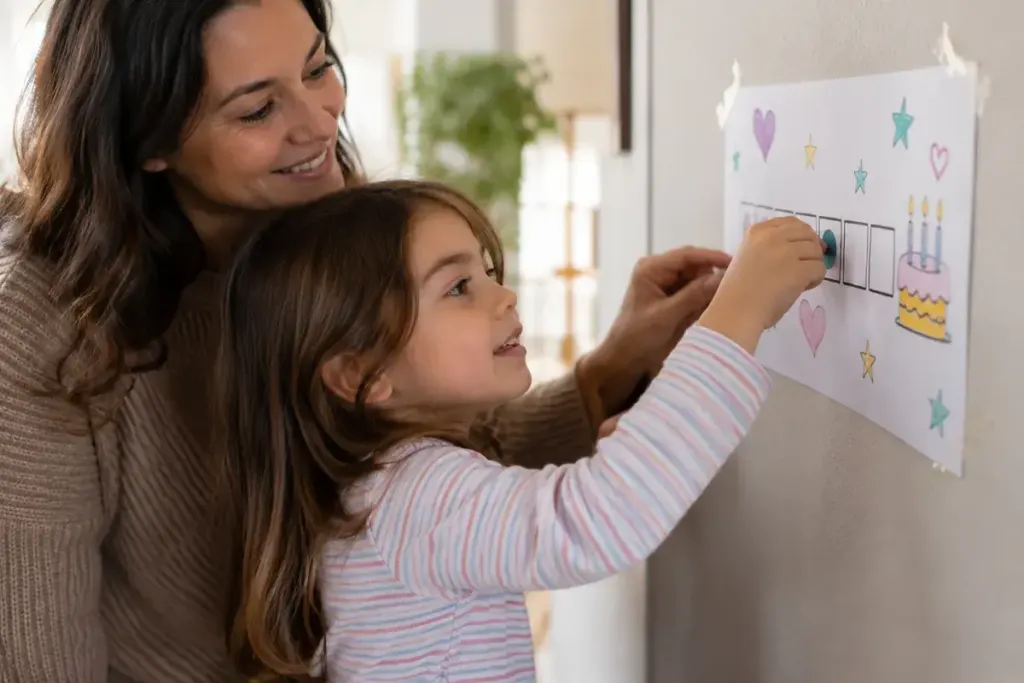
“Your party is soon” can mean very little to a young child. A small countdown can make the wait easier to follow, especially when everyone uses the same event date and the same way of updating it.
First decide what you are counting towards. The birthday itself, a school celebration and a weekend party may fall on different days. Label the calendar with the actual occasion so that crossing off the birthday does not appear to cancel the later party.
Choose one clear daily routine
If your family uses “sleeps,” explain that you mean the nights before the event, not daytime naps. Update the count at a consistent time, such as after waking. For some children, marked calendar days or pictures may be clearer than the idea of sleeps.
A fictional example: on Thursday morning, a Saturday party is two nights away. On Friday morning, one remains. On Saturday morning, the countdown reaches the event day. Walk through that example together before relying on the numbers alone.
Use paper marks, large reusable pieces or another age-appropriate method. Avoid small detachable decorations that could be a choking hazard, and keep the display where it can be viewed safely.
Leave room for ordinary life
The countdown does not need a gift or new activity every day. It can simply show the passage of time. If the child enjoys helping, add one genuine preparation task, such as choosing a song or placing napkins, without turning the whole week into a performance.
If plans change, explain the change plainly and adjust the display together. Do not keep a known incorrect date visible just to avoid an awkward conversation.
On the event day, describe the next concrete step rather than promising that everything happens immediately. Breakfast, travel and guests arriving can still take time. A useful countdown makes the plan more understandable while leaving space for the day’s real sequence.