
A school jumper, a favourite toy, and a reading book can become surprisingly important when a child moves between two homes. A packing list cannot settle every difficulty, but it can remove some avoidable searching from the transition.
Raising Children Network’s guidance on two homes discusses predictable arrangements and helping children adjust after separation. The practical list below should fit the child’s age and the family’s circumstances. Adults remain responsible for important arrangements; the child should not become the messenger for adult disagreements.
Separate everyday supplies from things that travel
Some basics may be kept in both homes where feasible. Other items, such as a particular school book or comfort object, may need to travel. Put only the travelling items on the transition list so it does not become an inventory of every possession.
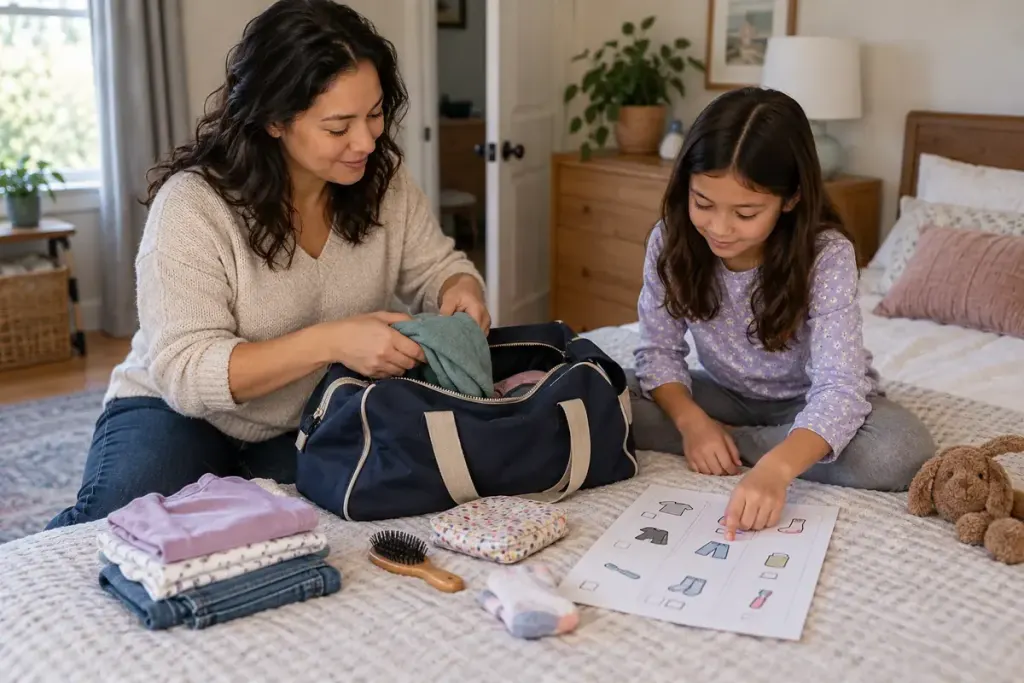
For a younger child, a few pictures can be easier to use than a long written checklist. An older child may prefer a short phone note. Invite their input without making them responsible for solving every missing-item problem.
Try a fictional three-part list: school items, tomorrow’s activity, and one comfort item. Check it at a calm point before leaving rather than at the door. Adults should separately handle medication, essential documents, and any agreed care instructions through an appropriate reliable process.
After a few transitions, remove items that never need to move and add recurring omissions. If something is forgotten, use the experience to improve the list rather than turning it into a test the child has failed.
The list works best when it supports a predictable routine and respectful communication. Its purpose is to help the child arrive with what they need, leaving more space for settling in and less for an urgent search through bags.