
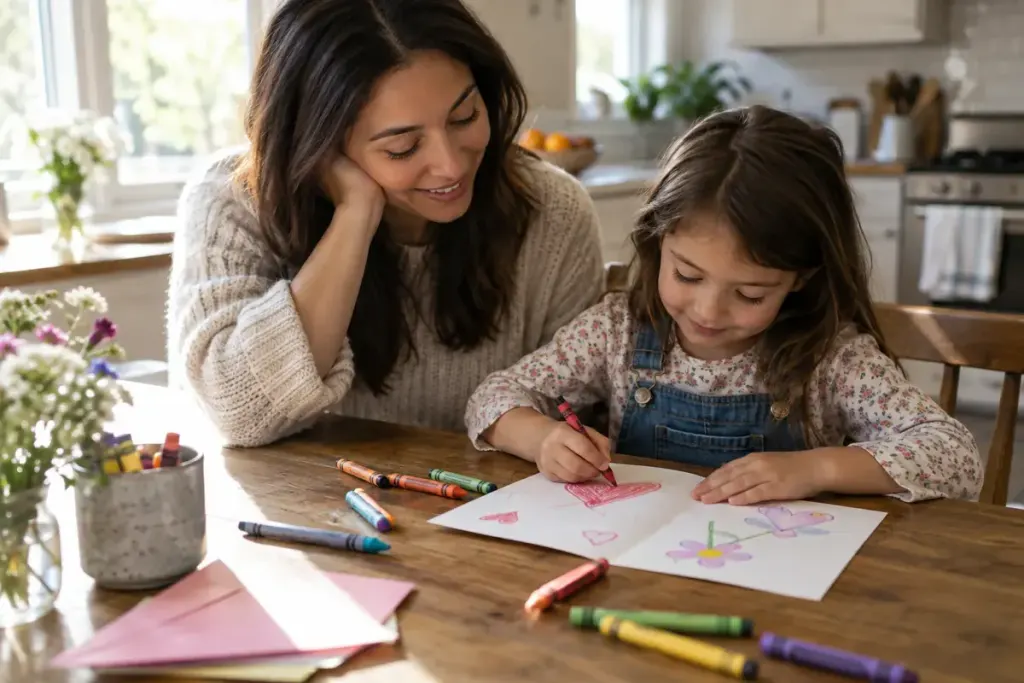
A child wants to thank someone for a gift but stares at the blank card. “Write something nice” is a broad instruction. A smaller prompt can help: what is one thing you did, noticed or enjoyed?
Raising Children Network’s guidance on family relationships includes showing appreciation for kind actions. A thank-you note is one possible family practice, not a test that proves a child feels grateful in the correct way.
Begin with a real detail
For a fictional example, a child given drawing materials might say, “I used the blue pencil to draw our dog.” That is more personal than an adult supplying a long sentence about a wonderful, thoughtful present. Write down the child’s words if they need help with writing.
The message can thank someone for time or help as well as an object. “Thank you for showing me how to plant the seeds” names an experience and the person’s contribution. Avoid requiring the child to claim they loved something they did not enjoy.
Choose a manageable form
A drawing, a short dictated message or a few handwritten words may suit the child’s age and abilities. Keep the task short enough that decorating the card does not become a long session of correction. The recipient is likely to value the recognisable voice more than perfect spelling.
If a message will be sent digitally, help the child choose an appropriate channel and protect private information. A personal thank-you does not need to become a public post with the child’s name, school or location.
Let the adult model the same habit in ordinary life: thank someone specifically for what they did. Children then see appreciation as part of relationships, not an assignment reserved for birthdays.
Before sending, read the message back and ask whether it says what the child intended. Add the recipient’s name and a suitable sign-off, then let it be finished. A sincere small message is enough; it does not need to become an adult’s polished letter disguised as the child’s work.