
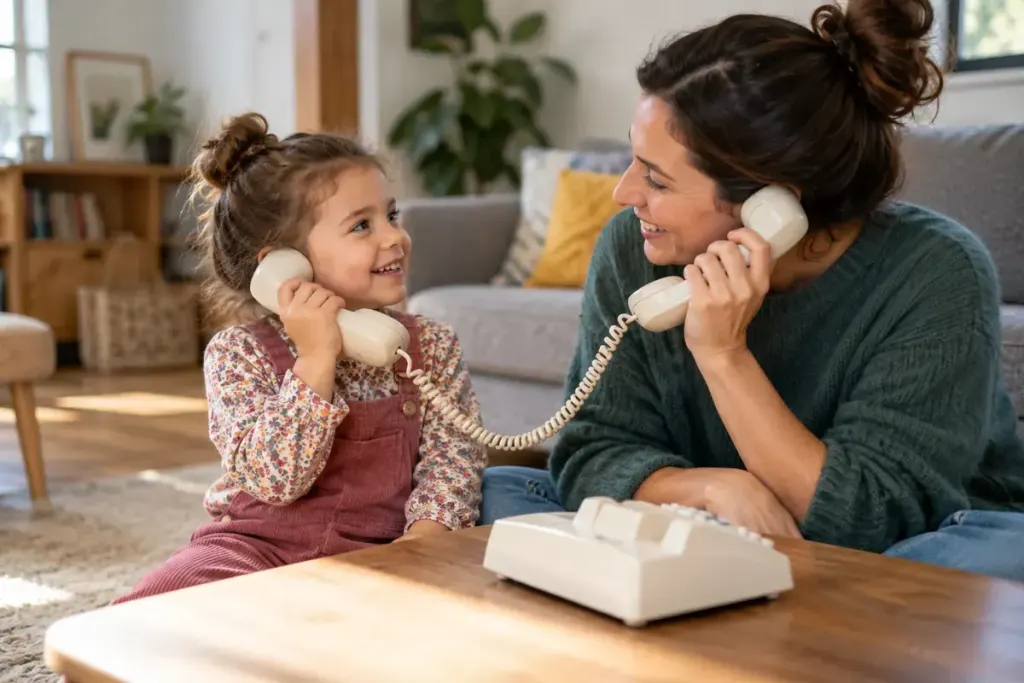
A child who chats comfortably at home may become quiet when a relative calls. A telephone conversation removes some familiar cues and introduces a different rhythm. A short pretend call can make that rhythm less mysterious without turning it into a performance.
ASHA’s public guidance on supporting speech and language development encourages conversation, modelling and age-appropriate play. The activity below is a simple family practice idea, not a diagnostic test or a promise of a particular developmental outcome.
Use a tiny conversation with a clear ending
Start with toy phones or disconnected props. One person greets the other, asks one familiar question and says goodbye. Choose something the child already enjoys discussing, such as a pet, a drawing or a game.
Take turns being the caller. Leave time for a response instead of immediately filling every pause. If the child prefers to point, use pictures, gesture or another communication method, include that method rather than insisting on spoken words.
Model how to ask for repetition: “Could you say that again?” It is a useful option for anyone, not a sign that the child has failed to listen. Keep the practice brief and stop while it remains comfortable.
Make a real call predictable
With a familiar, willing adult, agree on a short call and tell the child what will happen. Stay nearby and let the child choose whether to join. Avoid putting them on the spot in front of a large group.
Explain basic privacy in age-appropriate terms: an adult should help with unfamiliar callers, and personal details should not be shared simply because someone asks. Do not use real emergency numbers for practice.
If you have concerns about hearing, speech or language, seek advice from an appropriate professional. For everyday family play, success can be as modest as recognising the greeting and enjoying one exchange. The purpose is familiarity and connection, not a perfectly delivered script.