
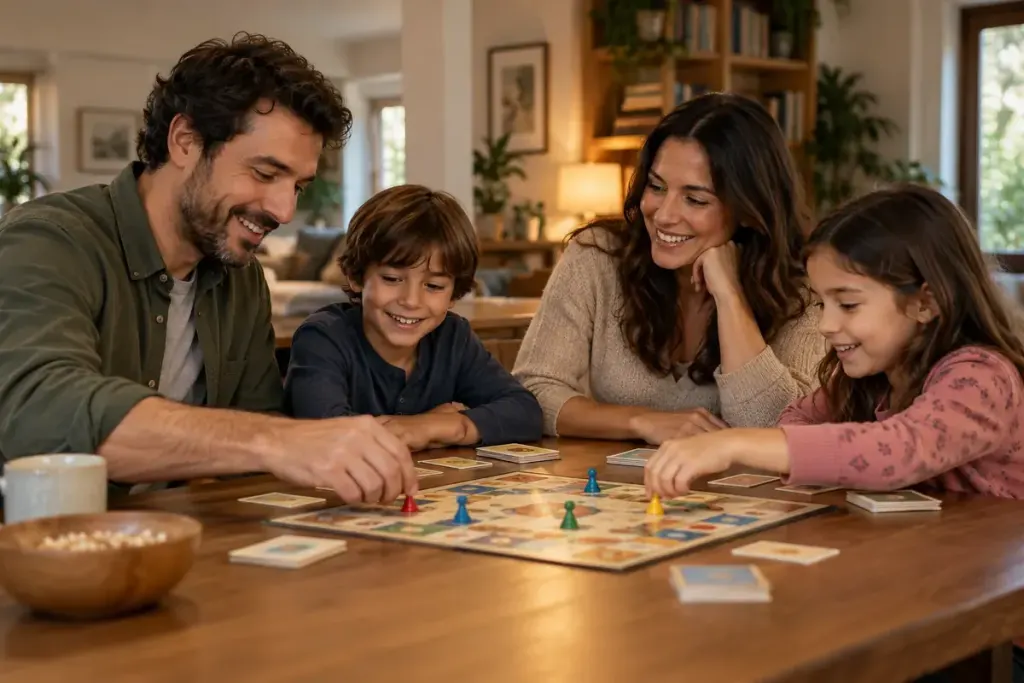
The last card is played, and a child realises they have lost. The game may be over, but the difficult part of the afternoon is just beginning. An adult can acknowledge the disappointment without changing every result to make it disappear.
Start before play. Choose a game whose length and rules suit the people at the table, explain how winning works, and agree that anyone can request a pause. A tired child facing a long, unfamiliar game has a different challenge from someone enjoying a short favourite.
Make room for the feeling
A simple response such as “You really wanted that last turn to go differently” recognises the experience without promising a different outcome. Give the child a little space before discussing strategy or asking for a cheerful reaction.
Keep the boundary clear if pieces are being thrown or someone is being hurt. Pause the activity and make the area safe. Understanding disappointment does not require accepting behaviour that harms another player.
Avoid turning the moment into a public lesson about being a bad loser. The immediate task is to help the child regain composure; a short conversation later is more likely to be useful than a lecture during the upset.
Build the next game differently
Offer a choice between another short round, a cooperative game or a different activity. Discuss any house rules before the next round begins. Changing them only after one person loses makes the game less predictable for everyone.
Adults can model an ordinary response to their own loss: name a move they enjoyed, congratulate another player without sarcasm and put the pieces away. That gives children an example without demanding an immediate performance of the same behaviour.
Notice what helped: a shorter game, clearer rules or an earlier break. The aim is not to remove every uncomfortable feeling from play. It is to make the table a place where people can experience those feelings and still return to one another kindly.