
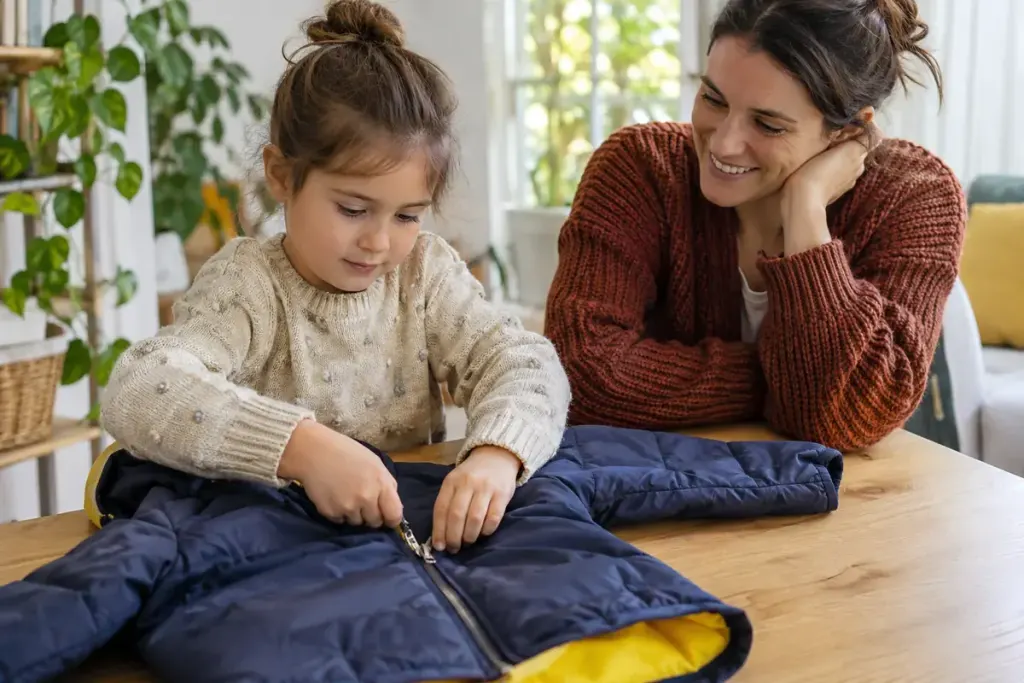
A child can see a button clearly on a shirt lying on the table but struggle with the same button while wearing it. On the body, the task adds a different viewpoint, moving fabric and the need to coordinate both hands in a smaller space. Practising off the body can separate those challenges.
Norfolk’s occupational-therapy guidance on dressing suggests practising fastenings with clothing on the table first and building zip skills in steps. The purpose is to make learning manageable, not to impose a fixed timetable on every child.
Choose one fastening and a calm moment
Use a familiar garment with an easy-to-see button or zip. Sit comfortably and place the garment where the child can see and reach it. Practise when nobody is rushing to leave the house.
Show the action slowly, then let the child try the part they are ready to attempt. With a zip, an adult might initially connect the pieces and start it, leaving the child to pull it upward. Gradually adjust the help rather than removing it all at once.
Keep the success specific
“You pulled the zip to the top” describes an achieved action. It is clearer than deciding the child can now manage every coat independently. A different fastening, tight sleeve or unfamiliar garment changes the task.
Once the action is comfortable on the table, try it on the garment while worn, with appropriate support. Allow time for the changed perspective. If frustration rises, pause rather than turning repetition into a contest.
A short family note can record which step the child completed and what assistance helped. This makes it easier for another caregiver to offer consistent support without starting the whole task differently each time.
Comfort, sensory preferences and physical needs also matter. If dressing remains unusually difficult, painful or distressing, seek advice from the child’s healthcare or occupational-therapy service. Small-step practice is one helpful approach, while the right support should fit the child and the demands of the particular garment.