
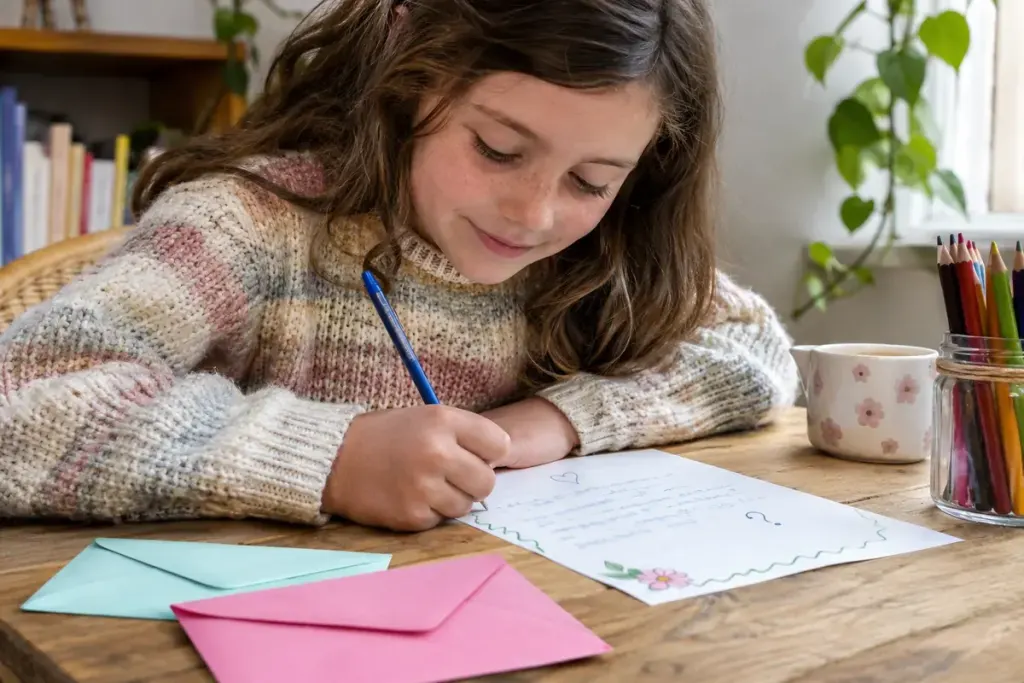
A first pen-pal letter does not need to contain a whole life story. One small detail and a question can give the recipient something comfortable to answer. For a child, the activity works best when an adult helps arrange the exchange before the envelope is addressed.
Begin with something ordinary and specific
Instead of a long list of favourites, suggest a tiny story: a plant that finally grew a new leaf, a funny-shaped cloud, or a book character who made the writer laugh. The detail gives the letter a voice without requiring private information.
Then add a question connected to it. “What is something you like to draw?” is easier to approach than “Tell me everything about yourself.” Leave room for the other person to answer differently rather than testing whether their interests match.
A simple page plan
- Offer a greeting and the name the writer is comfortable using.
- Share one small observation or interest.
- Ask one or two easy questions.
- Close warmly without demanding a quick reply.
A drawing can carry part of the conversation. Children who find handwriting tiring can dictate a sentence, type with support, or send a carefully chosen picture. The point is connection, not producing a perfect school exercise.
Arrange the return route with care
Use an adult-supervised school, family, or established programme arrangement. Agree which address can be shared and avoid adding school timetables, account details, or other unnecessary personal information. Do not post photographs of an addressed envelope publicly.
Postcrossing’s privacy guidance explains its own address-sharing safeguards and options such as a post-office box. Its postcard system differs from an ongoing pen-pal exchange, so those protections should not be assumed to apply elsewhere.
Before sealing the letter, read it together for clarity and check postage and the agreed address. Keep a short note of the date sent and the question asked. When a reply arrives, that note can help the next letter become a conversation rather than another introduction.