
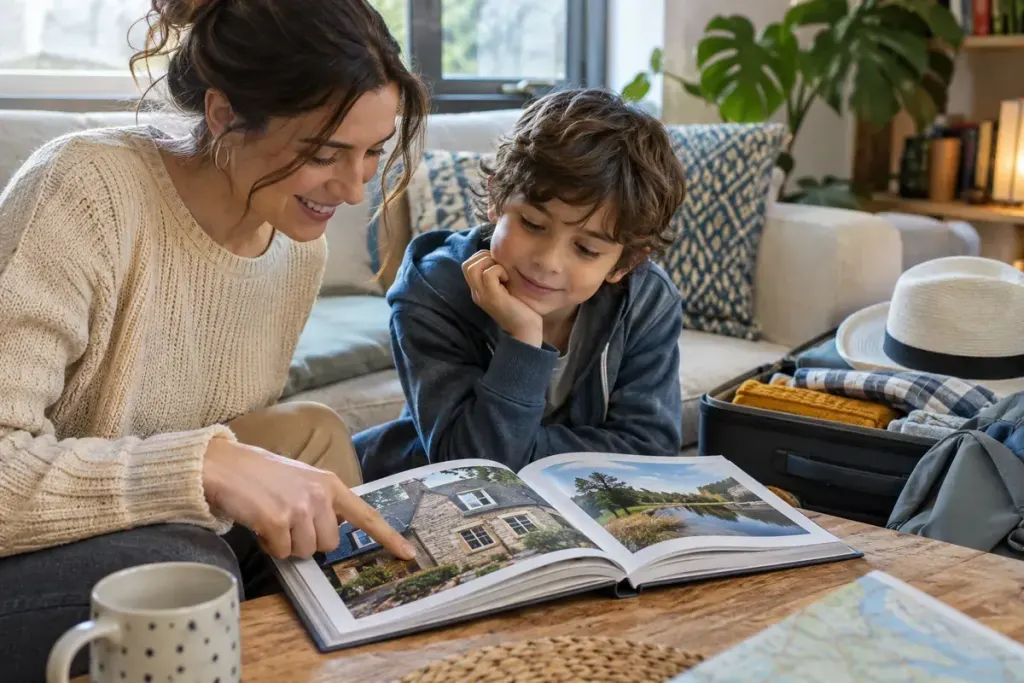
A child is about to visit a relative’s home for the first time. Explaining the journey repeatedly may still leave the place difficult to imagine. A few relevant photographs can give the conversation something concrete to return to.
Sheffield Children’s guidance on visual supports explains how pictures or simple photographs can make information more lasting than spoken language alone. A family photo book is one possible adaptation of that idea, not a guarantee that every child will find the visit easy.
Choose the useful details
With permission, include the entrance, the person you expect to meet and a room the child is likely to use. Keep backgrounds uncomplicated where possible. A clear picture of the front door may be more informative than a beautifully edited group photograph.
Add short captions that match what is actually known: “This is the door we plan to use” or “We may sit in this room.” Avoid promising a particular meal, person or activity unless it is certain enough to promise.
Let the child use the book their way
Offer it at a calm moment and notice which images attract attention. The child may want to point, ask a question, revisit one page or stop. It need not become a quiz about remembering names or following the expected sequence.
You might leave a blank page for a question or a photograph added after the visit. That gives the book a role in recalling the experience as well as anticipating it.
Keep personal photographs private and share only with the people who need them. If plans change, update the explanation rather than leaving the child to discover that the book and the day no longer agree.
The aim is a more understandable conversation, not perfect compliance. A useful book helps a child express what they recognise, what they wonder about and what support they may want when the visit happens.