
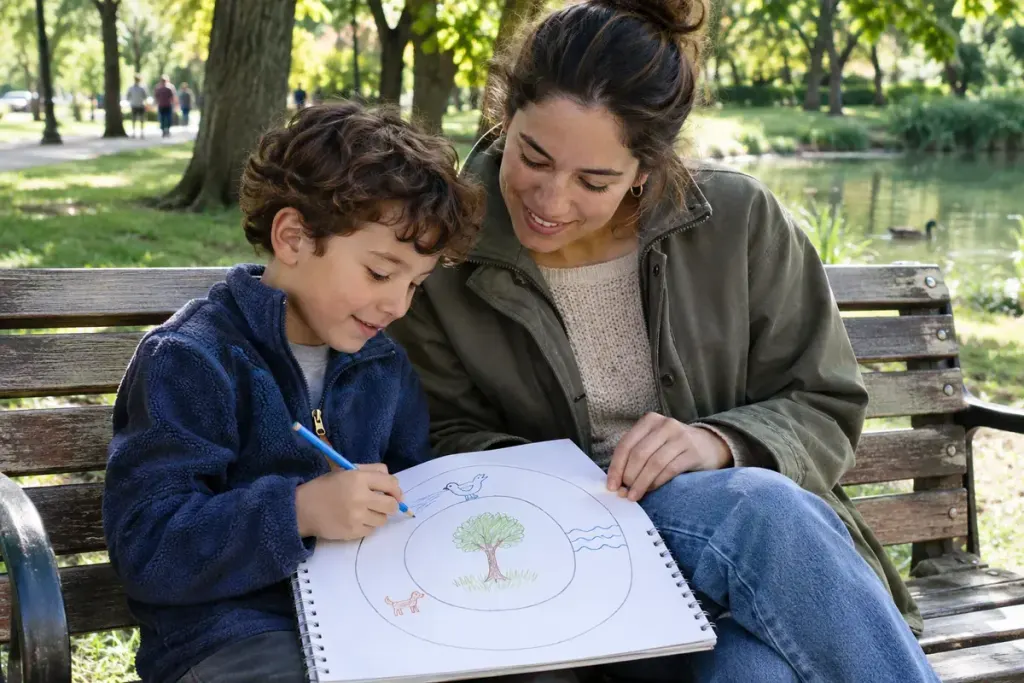
A walk does not need a long route or a bag of equipment to become an interesting family activity. One sheet of paper can become a map of the sounds you notice from a park bench, a garden chair or a quiet stretch of path.
The idea is to draw where things seem to happen around you, rather than produce an accurate street map. A wavy line might stand for leaves moving overhead. A small circle could mark a bicycle bell somewhere to the left.
Begin with one comfortable stopping place
Choose a place where everyone can pause safely without blocking a route. Draw a dot in the middle of the page for your group. Spend a short, agreed interval noticing the surroundings, then add marks around that centre.
Let each person choose their own symbols. If a child says a sound resembles a zipper, write that description beside the mark instead of correcting it to an adult label. You can investigate the source together when it is safe and practical.
Keep the activity flexible. Someone who finds listening difficult or tiring could map visible movement, a vibration they can feel, or objects another family member describes. There is no need to close eyes, stay perfectly still or hear every sound for the page to belong to them.
Compare maps without choosing a winner
Back at home, place two pages side by side. Did everyone notice the same bird? Was a distant vehicle more noticeable from one position? Which marks were certain, and which were guesses?
A second visit can add a new layer in another colour. Write the time and the conditions at the edge so you remember why the place may have felt different. A busy weekend and a quiet weekday can make quite different pages.
Keep conversations private and use drawings rather than recording nearby strangers. The lasting object is a family-made page of observations: small details that might otherwise disappear between leaving the house and returning for lunch.