
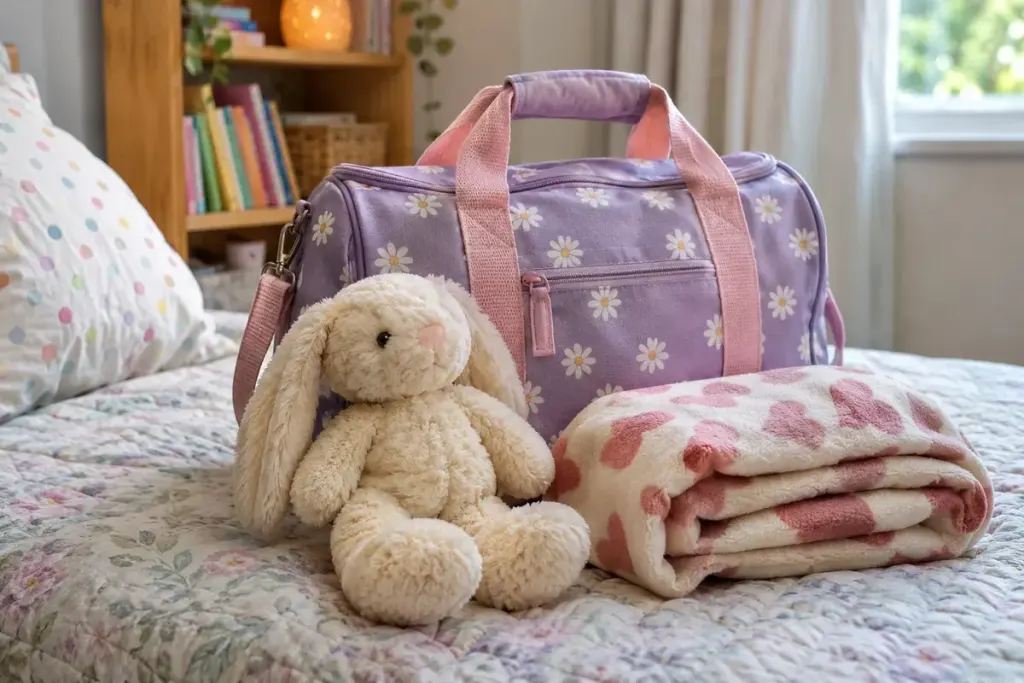
The overnight bag is packed, but a child returns to the bedroom for one well-loved toy. That object may be doing a job the spare clothes cannot: making an unfamiliar place feel connected to home.
The American Academy of Pediatrics describes transitional objects as a common source of reassurance. Using one does not mean a child is weak or cannot become independent. Equally, a child who does not choose a special object does not need an adult to assign one.
Give the object a practical place in the plan
For an older child’s first overnight stay with relatives, discuss when the toy might be useful: the journey, a quiet break, or the usual bedtime routine. Ask where the child would like to keep it. A familiar object helps most when it remains available, rather than becoming another thing adults control as a reward.
Before nursery or school, check the setting’s arrangements. A small labelled item may be easier to manage than a large blanket. Agree where it will wait during messy activities and who will help the child find it later. This avoids a comforting plan becoming a stressful search.
Plan for ordinary mishaps
Let the child help choose a travel pouch or a regular place near the bag. If an object needs washing, talk about the timing rather than making it disappear without explanation. A spare may be useful, but do not assume a replacement will feel identical to the original.
The object can accompany a reassuring goodbye and a predictable return; it does not replace either. Notice what your child actually finds helpful instead of measuring progress by how quickly they give it up.
Infant sleep needs a separate rule. The AAP’s safe sleep guidance says to keep soft objects and loose bedding out of a baby’s sleep space. A toy used during supervised waking time should not be placed beside a sleeping infant.