
“Tidy your room” can contain several hidden tasks: sort clothes, return books, clear a surface and decide what belongs elsewhere. A child who does not know where to begin may need a clearer task, not a louder reminder.
Show one finish line
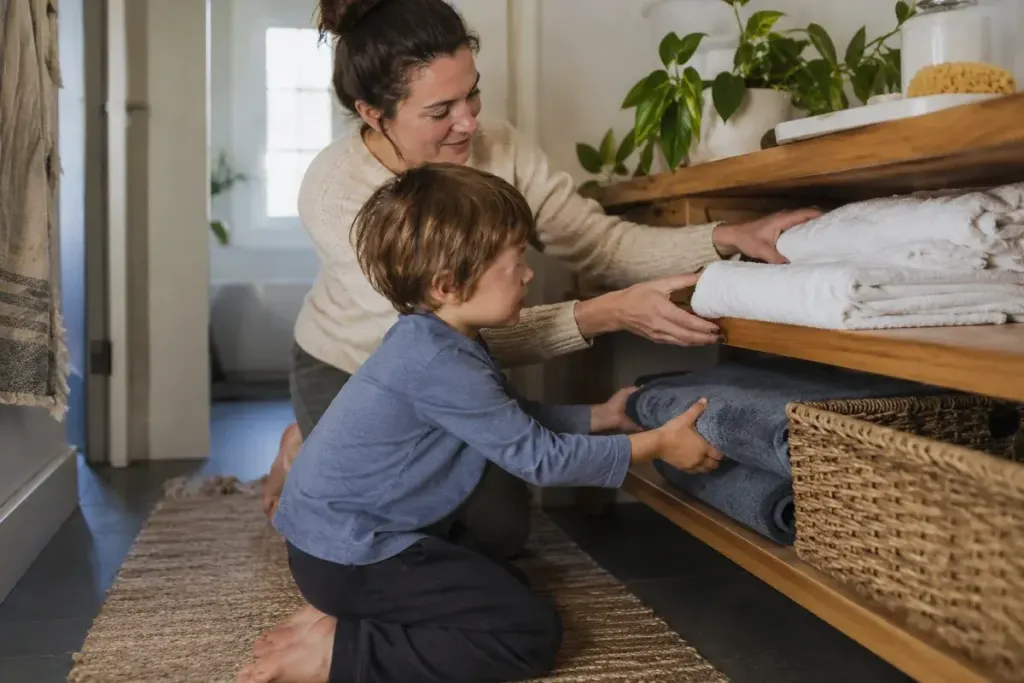
Choose a safe, age-appropriate job and describe its visible result. “Put these clean towels on the low shelf” is easier to understand than “help with the laundry.” Demonstrate once, then let the child try with support suited to their abilities.
A photo or simple picture sequence may help some children. Others prefer a spoken explanation or doing the first step together. Ask what works and adapt; one visual system is not automatically useful for every family member.
Reduce hidden decisions
Give frequently used items a reachable place. If sorting is part of the job, make the categories understandable. A basket labelled or pictured for socks is more concrete than an instruction to put everything “where it belongs.” Keep hazardous products, sharp tools and unsafe lifting outside the task.
Notice completion without immediately redoing the work to an adult’s cosmetic standard. If a correction matters, explain the specific reason and practise that step. A towel folded differently may still be usable; a blocked walkway needs attention for a practical reason.
Review whether the task remains manageable when the day is tiring or routines change. Offering help does not erase responsibility; it can make participation possible. Avoid comparing siblings whose needs and abilities differ.
The goal is a contribution the child can understand and increasingly manage, not a test of whether they can infer every household expectation. A clear finish line makes both learning and appreciation more specific.