
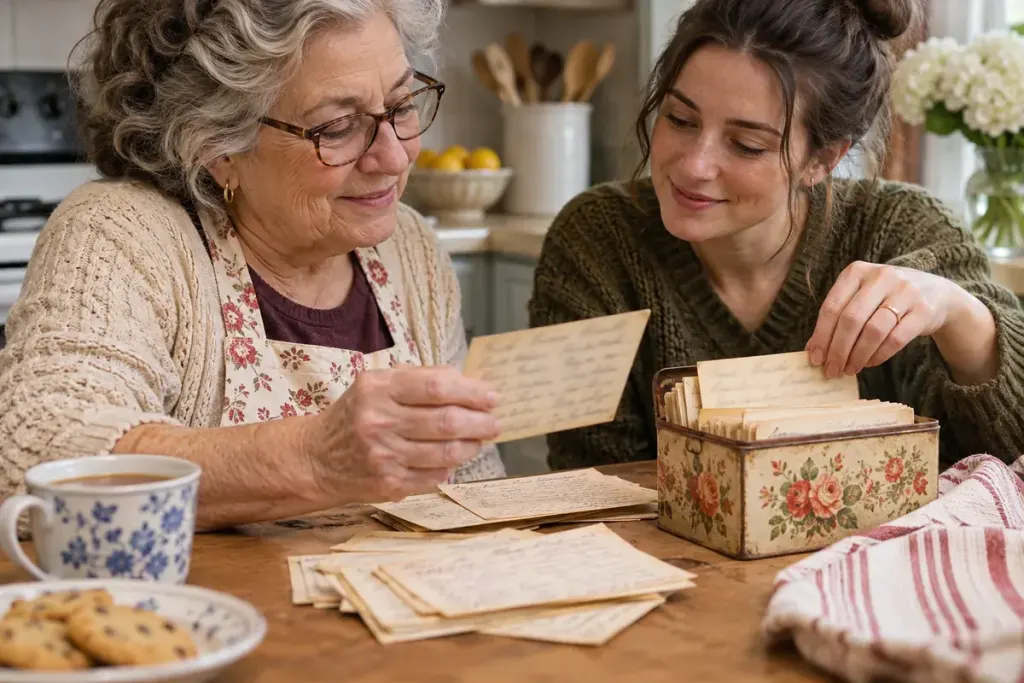
A recipe card can tell you how much flour to use and still leave out the reason the dish matters. Who taught it? When was it served? Which person always asked for an extra portion? A short conversation can preserve those connections without turning a family gathering into a formal research session.
The Smithsonian Folklife and Oral History Interviewing Guide offers a foundation for learning from family and community members. Food is a useful starting point because a familiar object or remembered meal can lead naturally into stories.
Ask permission before pressing record
Explain whether you want an audio recording, written notes or photographs, and who will be allowed to see them. Permission to talk at the kitchen table is not automatically permission to publish the conversation online. Let the person decline a topic, pause the recording or keep part of the story private.
Begin with one recipe rather than a request to explain an entire lifetime. Put the card or cooking tool on the table and ask an open question: “What do you remember about making this with your mother?” Follow the answer instead of reading the next question too quickly.
Leave space for the details that matter to them
- What occasion made this dish feel special?
- Who usually helped, and what did each person do?
- Was there a phrase or sound associated with the preparation?
- Has the meaning of the dish changed over time?
Keep the person’s uncertainty in the record. “I think it was the summer after we moved” is more faithful than silently assigning a precise year. If another relative remembers differently, preserve both accounts with their speakers identified rather than declaring one version the family truth.
Afterwards, label the file with the date, participants and recipe name, then make a private backup. Share a copy with the speaker and let them review any excerpt you plan to circulate. The finished record can remain small: a recipe, a voice and enough context for the next person to understand why both were worth keeping.