
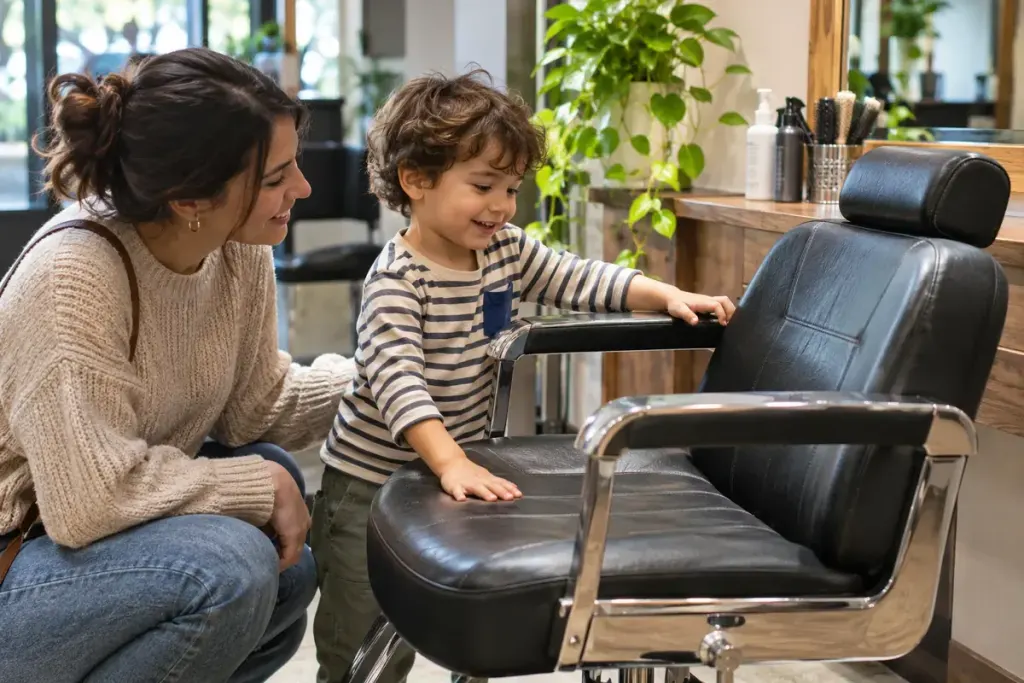
A haircut contains several experiences that adults may stop noticing: a stranger standing behind the chair, loose hair on the neck, a buzzing tool, and a cape that feels unfamiliar. For a child with sensory sensitivities, making the visit predictable can matter more than choosing a new hairstyle.
Preparation should start with what this particular child finds difficult and what helps. A quiet salon may suit one child, while another feels more comfortable with a familiar hairdresser visiting home.
Let the first visit have a smaller purpose
The children’s occupational therapy team at Aneurin Bevan University Health Board suggests meeting the hairdresser and seeing the salon before the haircut. Its guidance also discusses quieter appointments, previewing tools, and clothes that can be changed easily when loose hair feels uncomfortable.
A planning conversation might therefore be very specific: “Could we visit for five minutes, look at the chair, and leave without cutting?” Agree this with the salon first. A preview loses its value if the child is surprised by an appointment they were told would not happen.
Make the sequence and the choices visible
For the actual appointment, describe only the steps that will really occur. A short picture sequence could show arriving, choosing a seat, combing, cutting a small section, brushing away hair, and leaving. Adapt the format to how the child communicates; pictures are helpful for some children but not universally preferred.
Agree on a pause signal that the hairdresser can recognise. Ask before introducing a noisy tool or touching the child’s head. Offer meaningful choices that are available, such as a familiar towel instead of a particular cape when the stylist can safely accommodate it. Avoid offering a choice and then overruling it simply to keep to the schedule.
A successful appointment might be shorter than the haircut originally imagined. If distress rises, pause and discuss another approach instead of forcing completion. Persistent difficulties can be discussed with the child’s usual healthcare or occupational therapy team.
Afterward, record what helped: the appointment time, the preferred seat, or the tool that was uncomfortable. That small, individual record is more useful for the next visit than assuming one “sensory-friendly” label guarantees the same experience everywhere.