
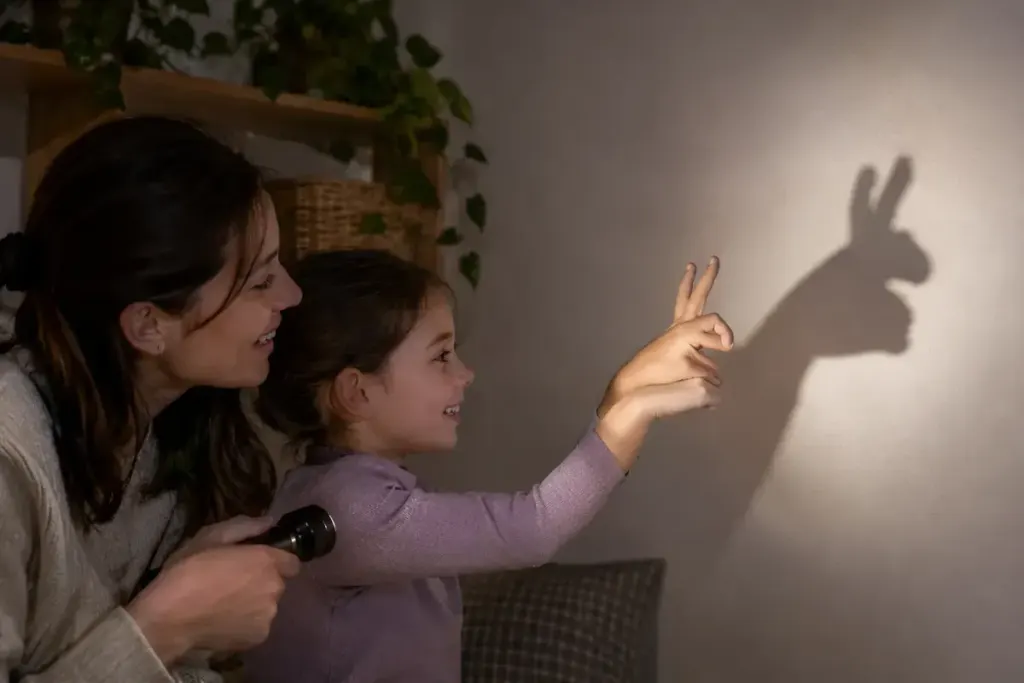
A cardboard rabbit can become a giant without gaining a single extra piece of card. Move it nearer a small light source while keeping the wall in place, and its shadow grows. That change can be the beginning of a family story as well as a small investigation.
Questacon’s shadow-puppet activity invites children to explore the shape and size of shadows by moving objects and lights. Its guidance also reminds adults that some lights become hot. A cool-running LED torch, positioned securely and kept away from eyes, is a simple starting point.
Build a scene with very few parts
Choose a clear wall and one uncomplicated cardboard shape. An adult can handle cutting where needed. Keep walking space clear and do not darken the room more than the family finds comfortable. Check that any small parts are suitable for the children taking part.
Try this original story prompt: a small rabbit discovers an enormous doorway. One person holds the rabbit, another moves the light, and a third describes what changes. The child can decide whether the doorway leads to a garden, a moon station, or somewhere else entirely.
Pause the story to change one thing. Keep the torch and wall still while moving the puppet. Then keep the puppet still and change its angle. A thin edge may make a broad animal almost disappear. Ask what the child notices before explaining what you expected.
Drawing stripes on opaque cardboard will not automatically put stripes into the shadow. That observation can lead to a useful question about outline and blocked light. You do not need to turn it into a quiz or demand the right scientific word.
End by letting each person choose one favourite moment to repeat. A photograph of the setup, if everyone agrees, can help recreate it another day. Store the puppet with a short note about the story rather than building a large theatre before you know whether the activity is enjoyed.
The appeal is that one small arrangement can change in many ways. The adult provides a safe setup and time to explore; the child does not have to reproduce a finished performance.