
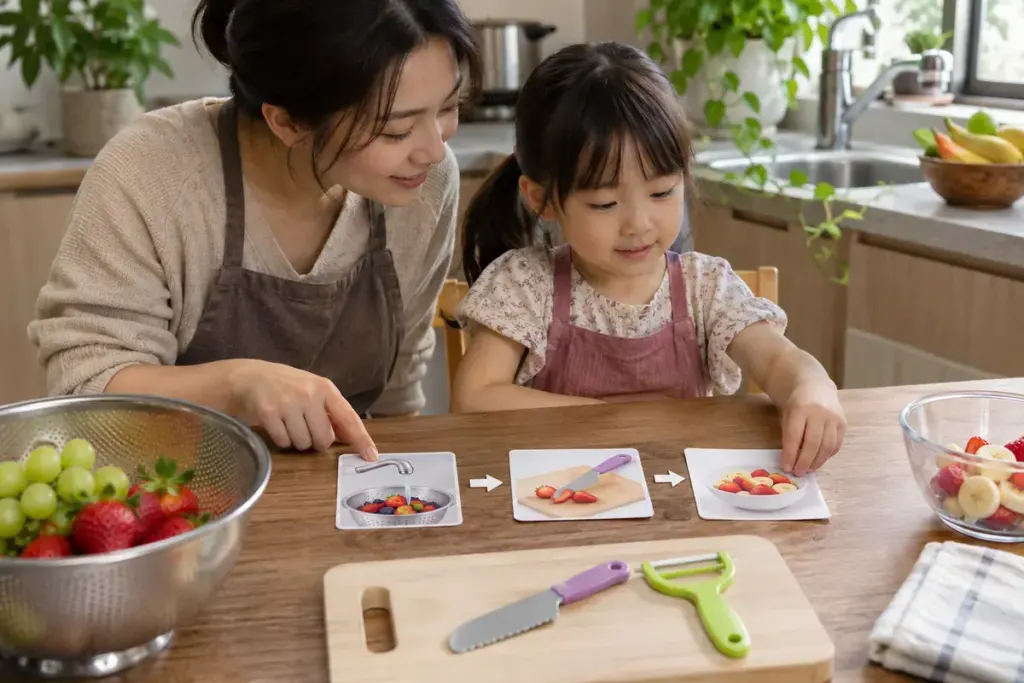
A recipe paragraph can contain several actions at once: collect a bowl, measure an ingredient, add it and stir. A visual recipe can separate those actions so a participant can see what is happening now and what comes next.
Start with a familiar, low-complexity activity and adapt it to the person’s preferences and support needs. The cards are an organising aid, not a test of independence or a treatment claim. Ask what format the participant finds useful instead of assuming everyone prefers pictures.
Build the sequence together
- Choose one action for each card, using a clear photograph or drawing of the actual item where helpful.
- Add a short label in language the participant understands. Keep the same word for the same action throughout.
- Arrange the cards in an agreed reading direction and show how completed steps will be marked or moved.
For example, assembling a cold snack could involve separate cards for placing a bowl, adding a prepared ingredient and mixing. The adult can prepare tasks involving sharp tools or heat according to the participant’s abilities and the household’s safety arrangements.
Confirm ingredients and any allergy-related precautions before the activity. A clear picture does not make an unsuitable ingredient safe, and supervision still needs to match the actual task.
Try the sequence once without rushing. If a card causes confusion, observe which detail is missing. Perhaps the photograph shows the finished bowl but not the amount to add, or two similar containers are hard to distinguish.
Revise that card rather than repeating the same instruction more loudly. Leave space for pauses, questions and choosing not to continue. Success might be enjoying one part of the activity together, not completing every step without assistance.
Keep the useful version for next time, but check whether the ingredients or equipment have changed. Familiarity helps only when the pictures still match what is actually on the table.