
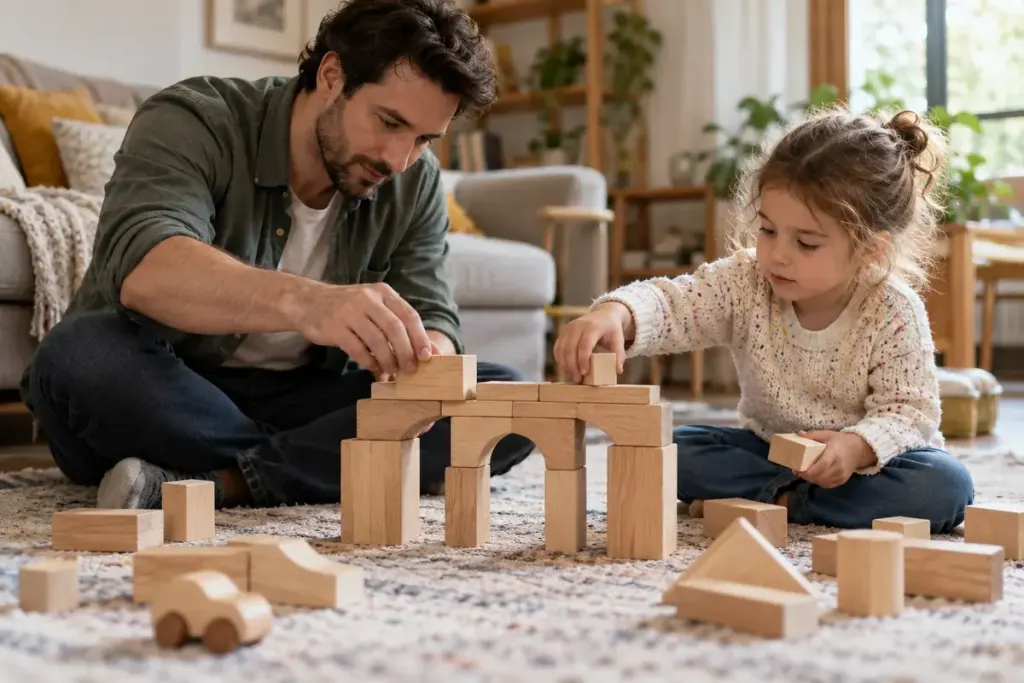
Place two groups of large wooden blocks a short distance apart and set a toy vehicle nearby. Instead of showing a finished bridge, ask: how could the vehicle get from one side to the other? The invitation creates a problem with several possible answers.
The NAEYC checklist for block play encourages opportunities for creativity, communication, problem-solving and redesign. The home activity below adapts those principles; it is not a test of a child’s intelligence or a promise of a particular developmental result.
Leave room for an unexpected solution
Choose blocks and a vehicle suitable for the child’s age, with adult supervision appropriate to the materials. Keep the build low and stable on a clear floor area. Avoid small loose pieces around children who may put them in their mouths, and do not turn the construction into something a child is expected to climb on.
Offer a modest selection of shapes. A child might span the gap, move the supports closer or build a road around it. Ask them to explain the idea before deciding that it is the wrong answer. The interesting work lies in noticing what the problem allows and trying a solution.
Use the first attempt as information
If the bridge falls, pause before rebuilding it yourself. Ask what moved first or whether the vehicle fits. A question tied to something visible gives the child a place to start; a string of hints can quietly turn the activity back into following instructions.
Let the child choose one change and test again. If they want to remember an earlier design, make a simple drawing or photograph with the family’s usual privacy rules. A later version can then be compared with something concrete rather than with an adult’s recollection.
Stop while the activity remains manageable. Saving a partially finished structure, where safe, can be more inviting than insisting on a perfect bridge before tidying up. The useful outcome may be a new question about balance or space, as well as a vehicle that finally reaches the other side.