
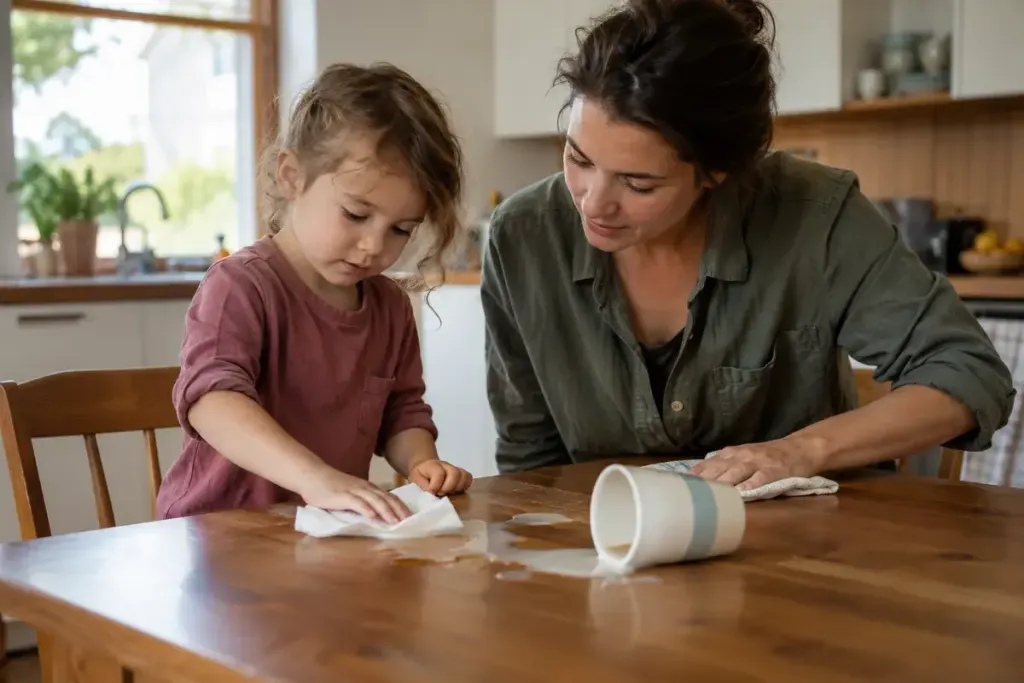
A cup spills while a child helps set the table. The immediate task is small: make the area safe and clean it up. The words around that task can either keep the event manageable or turn it into a judgment about the child.
Describe the event rather than assigning an identity. “The water has spilled; let’s get a cloth” gives a next step. “You are always careless” turns one incident into a broad label and offers little guidance about what to do now.
Match the task to age, ability and the situation. A child might fetch a towel or wipe a safe surface with help. An adult should handle hazards such as broken glass, hot liquid or electrical risks. Participation should not become a test in which safety depends on the child proving responsibility.
After the immediate problem is settled, ask what would make the task easier next time. Perhaps the jug was too heavy, the table was crowded or the child needed both hands. A practical adjustment can be more useful than repeating “be careful.”
- Name what happened briefly.
- Deal with safety first.
- Offer one manageable action.
- Explain a useful change for next time.
- Allow the ordinary activity to continue.
A small accident does not need a long public discussion. If other people are present, avoid turning the cleanup into an audience event. A quiet explanation can preserve dignity while still teaching that actions have consequences.
Adults make mistakes too. Calmly correcting your own error provides a concrete example of repair: acknowledge it, do what is needed and continue. The aim is not to remove all discomfort, but to help the child see a mistake as something that can be addressed rather than a permanent description of who they are.