
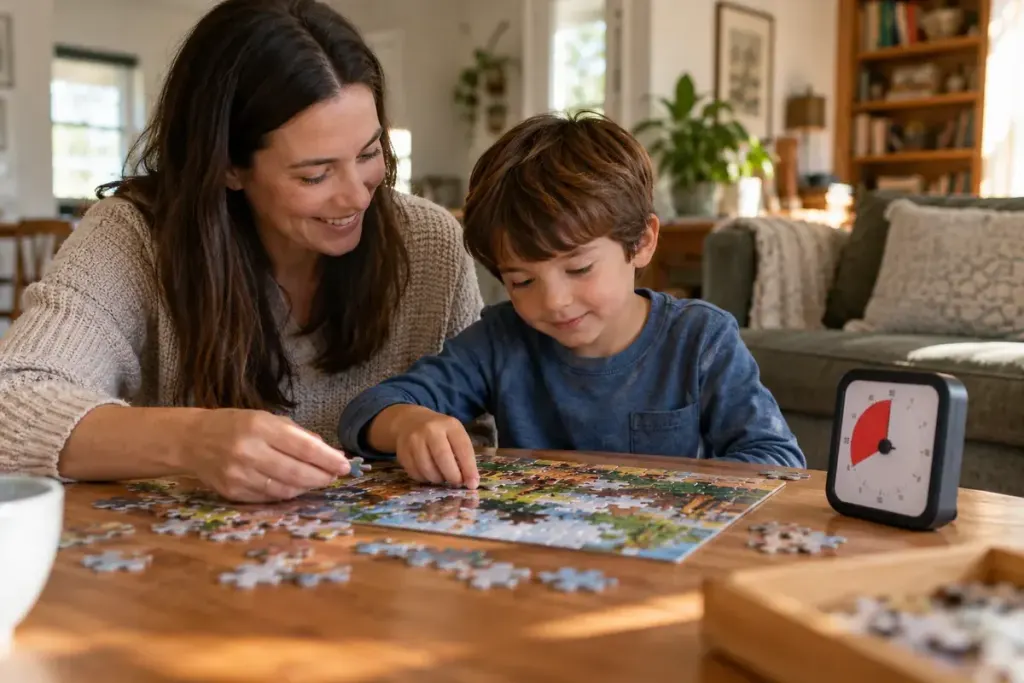
A child is absorbed in a puzzle when an adult announces that it is time to leave. The adult has been watching the clock; the child may have had no reason to expect the change. A transition warning makes that coming shift visible.
The warning needs to match the child’s understanding. A number of minutes may be useful for one child, while another understands a visual timer or a concrete finishing point more easily.
Connect the warning to an action
Try a clear sequence: “We will put in two more pieces, then put the puzzle on the shelf and get our shoes.” Choose a finishing point that you can actually honour. Avoid promising an extra activity if there is no time for it.
If a timer is helpful, explain what will happen when it finishes. The sound alone does not communicate the next step. Keep the message calm and consistent rather than repeating a countdown more loudly.
Make leaving easier to picture
Show where unfinished work can stay and when it can be revisited, if that is known. A photograph of a block structure or a tray for puzzle pieces may help preserve the activity without requiring it to be completed immediately.
Offer a small meaningful choice within the real boundary, such as which shoes to put on. Do not present leaving as optional when it is not; unclear choices can create a new disagreement.
Notice what makes a particular transition difficult. Hunger, tiredness, noise or an unexpectedly exciting activity can change how much support is needed. A warning is one tool, not a guarantee that a child will always respond smoothly.
Afterward, review the routine at a calm time and keep the parts that helped. The aim is to make changes more understandable and manageable, while leaving room for feelings and individual needs.