
A child may have understood the morning’s plan perfectly—and still be upset when it changes at lunchtime. The difficulty is not always remembering the instruction. It may be replacing an expectation they had already begun to rely on.
The CDC’s guidance on routines for young children recommends simple, predictable arrangements and explaining changes calmly. It also advises considering the child’s capabilities and understanding. The right explanation for a preschooler will differ from the discussion you have with an older child.
Show what changed and what stayed
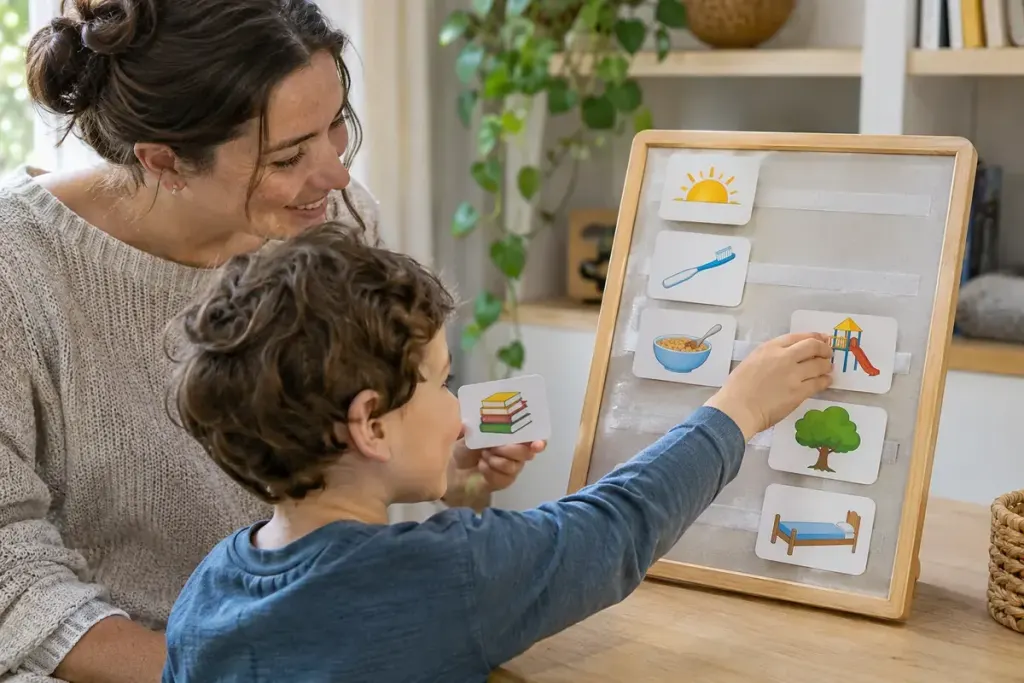
In an illustrative family plan, a park visit moves indoors because of heavy rain. Instead of saying only “we are not going,” identify the change and the remaining sequence: lunch is still first, then an indoor activity, then the usual pickup. A picture card or short written list can help the child return to that information.
Update the visible plan when you explain it. Leaving the original park picture on the board while verbally cancelling the trip creates two competing messages.
Offer choices you can honour
A choice might concern which of two available indoor activities comes next. Avoid offering a decision that has already been ruled out, or promising a replacement trip you cannot yet confirm. If the new date is unknown, say so in age-appropriate language.
Ask what part of the original plan mattered most. The answer may be seeing a friend, using a particular toy or having time together. You may be able to preserve part of that experience without pretending the change is insignificant.
Leave room to ask again
A child may need to revisit the plan more than once. Point back to the updated sequence and use consistent wording rather than treating every question as deliberate opposition. A calm reminder can be brief.
Afterwards, notice which explanation helped and which created confusion. Keep the planning aid proportionate; it should support family life rather than become another elaborate task.
For persistent difficulties that significantly disrupt daily life, seek advice suited to the child’s needs. For ordinary changes, a clear update, a realistic choice and somewhere to check the plan can make the transition easier to understand.