
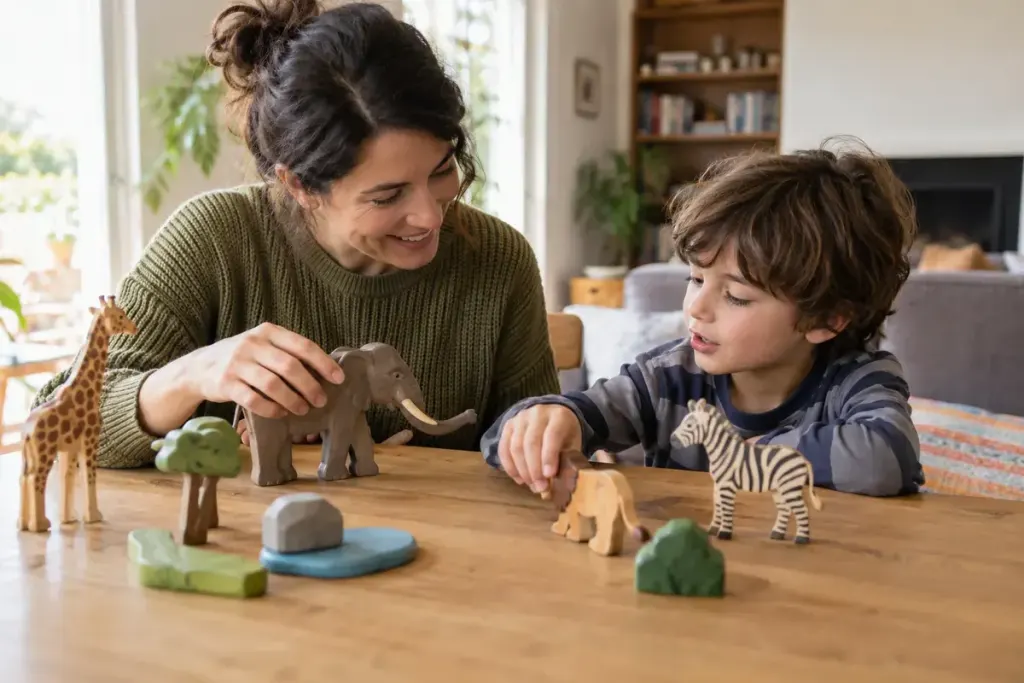
A wooden animal, a mitten and a small box can become the beginning of a family story. You do not need a finished plot before inviting a child to join in. In fact, leaving the next event undecided is part of the invitation.
The National Literacy Trust’s shared-story resources encourage adults and children to create stories together. A few objects can give the imagination something concrete to work with, without turning the activity into a test of correct answers.
Offer a beginning with somewhere to go
Try an original opening such as: “The little animal found a mitten outside its door, but it was much too big.” Then pause. The child might decide who owns it, turn it into a boat or introduce a completely different character.
Follow the contribution before adding another complication. If the mitten becomes a boat, your next turn could concern where it floats. Immediately correcting it back into a missing piece of clothing would close the route the child just opened.
A question can help when the story stalls, but several questions in a row can feel like an interview. Offer a choice, make a small contribution yourself or allow a quiet pause. There is no requirement to fill every moment with speech.
Make room for different ways to take a turn
A child may move an object, point, draw or make a sound rather than narrate a sentence. Treat that as part of the story if it is how they want to participate. Ask before interpreting an action when its meaning is unclear.
Keep the pace comfortable and the objects appropriate for the child’s age and abilities. The activity can last a few minutes; it does not need to become a performance for visitors or a recording for social media.
If the story ends halfway through an adventure, leave it there. You could place the objects together for another day or ask whether the child wants to make a picture of one moment.
The rewarding detail is often a decision the adult would never have planned: a box becomes a mountain, or the missing mitten belongs to the moon. Giving the child a genuine next turn makes space for those surprises.