
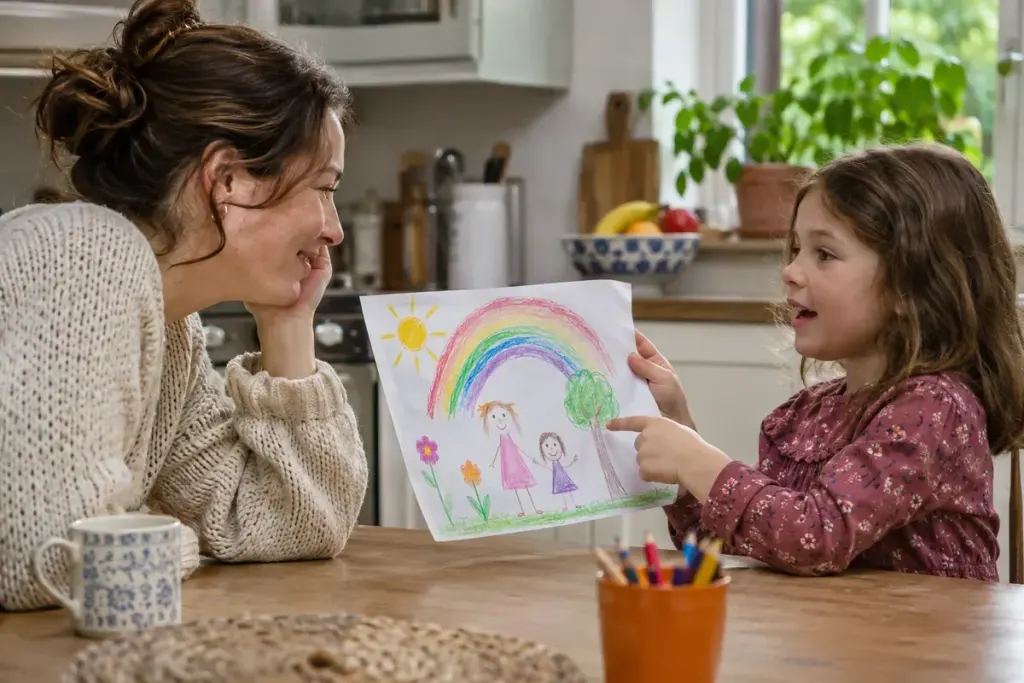
A child hands you a drawing full of loops and a large purple shape. “What a lovely elephant” is warmly intended, but the shape may be a bus, a storm or simply a colour the child enjoyed using. Leaving the meaning open gives the artist room to lead.
The National Association for the Education of Young Children’s suggestions for creative thinking encourage conversations that invite children’s ideas. An open invitation to describe the picture can be more useful than supplying the answer yourself.
Begin with something you can actually see
You might notice that several lines cross the page or that the child used two colours together. Then pause. A neutral observation gives them a starting point without requiring a particular story.
If they want to talk, follow the detail they choose. Ask how they made a texture or what they would like you to notice. Avoid turning every response into another question. Sometimes the child wants company while drawing, and sometimes the finished page is simply a gift.
Here is an invented exchange: an adult notices a row of circles; the child explains that they are windows on a train. The adult can then ask about the train if the child seems interested. The conversation grows from the child’s account instead of correcting the circles into something more recognisable.
Let the drawing remain theirs
Ask before adding a name, date or dictated caption to the artwork itself. A separate note or a mark on the back may suit the child better. If they describe it differently tomorrow, that does not make today’s account wrong; pretend play and creative meaning can change.
Do not diagnose emotions or family relationships from a single colour or missing feature. If you have a genuine concern about a child’s wellbeing, consider the wider context and seek appropriate professional guidance rather than treating an ordinary drawing as a psychological test.
When displaying the work, let the child help choose what to keep and where it goes. Praise can focus on an observed choice or effort without making every picture compete for the title of best.
The invitation is simple: there is room here for your explanation, and room for you not to explain. That makes the drawing a shared moment while keeping its authorship with the child.