
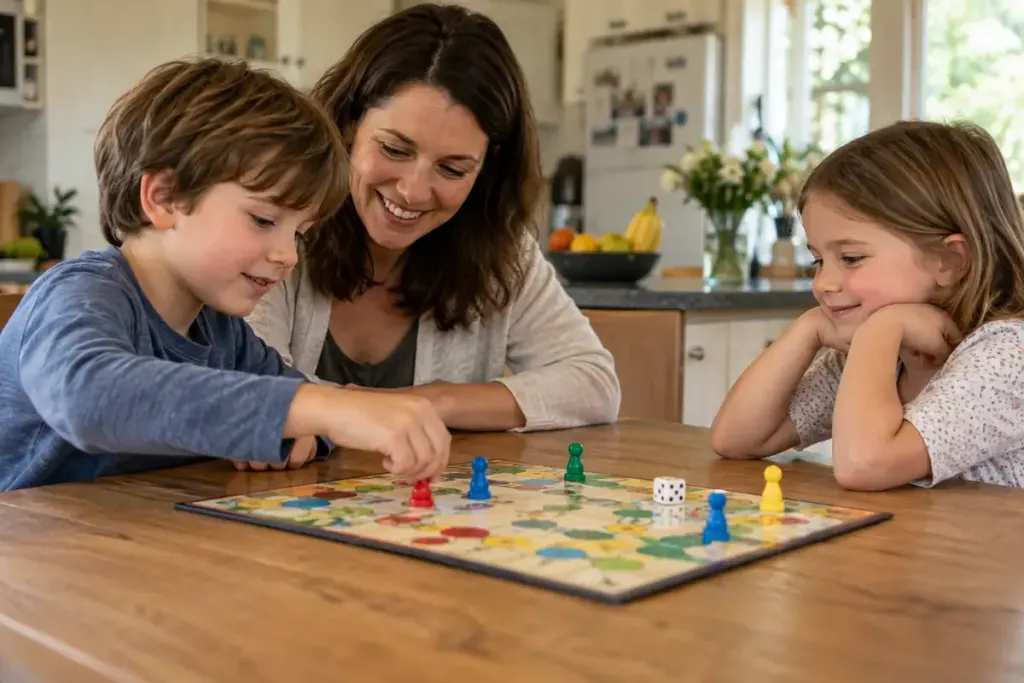
A child can understand “wait your turn” and still find an open-ended wait difficult. A short game makes the sequence visible: one person acts, the next person acts, and everyone can see when the round is finished.
Choose a simple, age-appropriate activity with few rules. It might be placing one piece at a time in a shared picture or playing a brief board game. Avoid tiny pieces where they pose a choking risk, and adapt the activity to the children’s abilities.
Make the order easy to see
Demonstrate a round before starting. A visible marker can show whose turn it is, provided it does not become another object to argue over. Use names and plain language rather than expecting the child to infer the order from where everyone is sitting.
Keep early waits short. An adult’s long explanation during their own turn can make a simple activity feel unpredictable. If someone needs help, pause the game rather than letting the next player rush ahead.
Agree how the game ends
Choose a small number of rounds or a clear shared goal. “We stop when this row is finished” is easier to understand than “we will play for a while.” Give a brief reminder before the final turn.
If frustration rises, reduce the complexity or take a break. The activity is practice, not a test of character. Avoid labelling a child selfish because they struggle with waiting on a tired day.
Adults can model a mistake and repair it: “I moved before your turn was finished. I will put it back and wait.” That shows what to do when the rule is missed.
Afterwards, mention a concrete success, such as noticing whose turn came next. Keep the next session manageable. A few calm rounds can offer more useful practice than a long game that ends only when someone becomes overwhelmed.