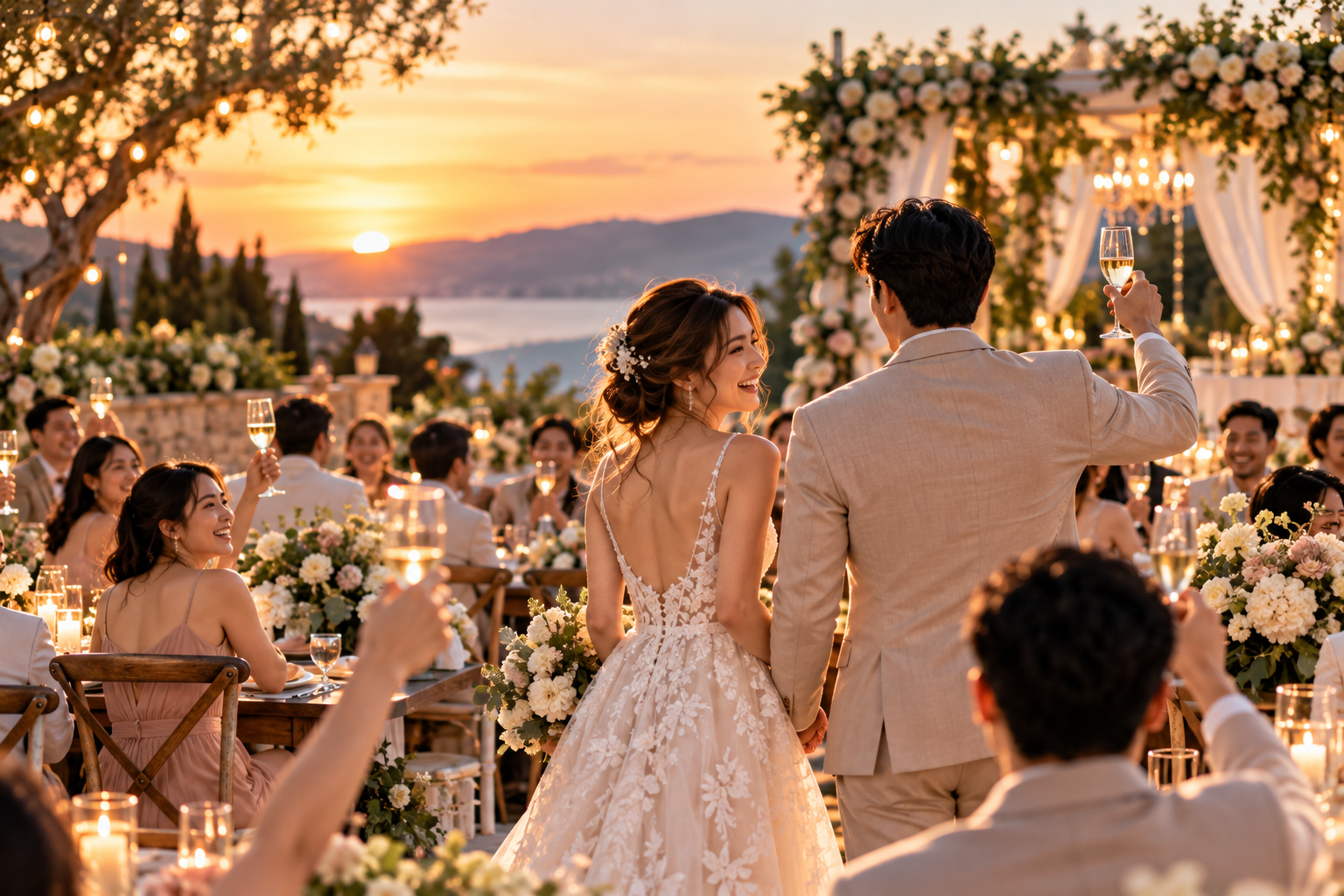
The flowers are perfect.
The tables look exactly like the inspiration photos. The ceremony backdrop is beautiful, the cake is waiting, and every decorative detail has been carefully chosen.
Then the wedding actually begins.
Guests cannot figure out where to park. The ceremony starts late. Afterward, nobody knows where to go. There is a long wait before food appears, older relatives cannot find comfortable seating, and by the time the dance floor opens, part of the room has already lost its energy.
Nothing is necessarily wrong with the wedding.
But something does not feel effortless.
That difference often comes down to the wedding guest experience. A memorable celebration is not created only by what guests see. It is also shaped by how easily they can move through the day, whether they feel comfortable, and whether every transition makes sense. Wedding-planning guidance consistently identifies long gaps, unclear transitions, physical discomfort, and poor guest flow as common problems that can undermine an otherwise beautiful event. Events with Ambiance
Start Planning From the Parking Lot, Not the Ceremony
Couples naturally imagine the emotional moments first.
Walking down the aisle.
The vows.
The first dance.
Cutting the cake.
But your guests experience the wedding before any of those moments happen.
They need to reach the venue, understand where to park or where transportation drops them off, locate the entrance, and determine where they should go next.
Imagine arriving somewhere unfamiliar while dressed formally and discovering three possible entrances.
There is no obvious direction.
Other guests look equally confused.
Within minutes, the wedding has created unnecessary friction.
Walk through the entire arrival experience before the wedding day.
Ask yourself what a person who has never visited the venue would understand without assistance.
The easier the arrival feels, the more relaxed guests are when the celebration actually begins.
Guests Should Rarely Have to Ask, “Where Do We Go Now?”
One of the most overlooked parts of wedding planning happens between the major events.
The ceremony ends.
Now what?
Does everyone move toward another room?
Should they remain seated?
Is cocktail hour somewhere else?
Are photographs happening first?
The couple and vendors know the plan because they have discussed it repeatedly.
Guests have not.
Clear transitions are therefore essential to the wedding guest experience. Confusion commonly appears during movements between the ceremony, cocktail hour, reception, dinner, and dancing. Plan A Wedding
You do not need signs everywhere.
Instead, combine simple communication with intuitive movement.
An usher can guide guests.
The officiant can briefly explain what happens after the ceremony.
Music can help establish that one portion of the event has ended.
The physical layout can naturally direct people toward the next space.
Good coordination should feel almost invisible.
Guests simply know what to do.
Do Not Schedule Every Minute Back-to-Back
A wedding timeline can look perfect in a spreadsheet.
Reality behaves differently.
Someone takes longer getting ready.
Family photographs need another ten minutes.
Guests walk slowly between spaces.
A vendor needs extra setup time.
Dinner service takes longer than expected.
If every activity begins immediately after the previous one, a small delay early in the day can affect everything that follows.
Build breathing room into the schedule.
That does not mean creating large empty gaps for guests.
It means allowing internal flexibility so the event does not constantly feel like it is trying to catch up.
Current planning guidance commonly recommends buffer time around transitions because small delays can otherwise cascade through the schedule. Coorda
A good timeline provides structure.
A great timeline provides structure without making everyone feel rushed.
But Do Not Give Guests Huge Empty Gaps Either
Buffer time and guest waiting time are different.
The planner may need twenty minutes of flexibility behind the scenes.
Guests should not necessarily spend those twenty minutes standing around wondering what is happening.
One of the fastest ways to drain energy from a wedding is an unexplained gap.
Imagine the ceremony finishes at 4:00 p.m.
Dinner is much later.
Photos are happening somewhere else.
Guests are left with limited seating, no clear activity, and no idea when the next part begins.
Eventually phones appear.
People become hungry.
Some begin thinking about leaving.
If there is a genuine gap, give it a purpose.
Cocktail hour works because guests understand the format.
There can be drinks, light food, music, conversation, comfortable seating, or another simple activity.
The objective is not constant entertainment.
It is preventing uncertainty.
Comfort Is More Important Than an Instagram-Worthy Chair
A chair can photograph beautifully and still be uncomfortable.
An outdoor ceremony can look spectacular while guests sit directly under intense sun.
A garden reception can feel romantic until someone wearing formal shoes has to cross difficult terrain.
A winter venue can appear magical while guests spend the evening feeling cold.
When making design decisions, ask two questions:
Does it look good?
And does it actually work?
Guest comfort includes temperature, shade, hydration, seating, restroom access, terrain, accessibility, and enough places for people to rest. These practical details are frequently cited by wedding professionals as central to a positive guest experience. Events with Ambiance
Guests may never compliment you because water was easy to find.
They will definitely notice if it was not.
Think About Older Guests Before Finalizing the Layout
A wedding can include people from very different generations and with very different physical needs.
The youngest guests may happily stand for long periods.
Grandparents may not.
Some guests may have limited mobility.
Others may need easy restroom access or a shorter route between major spaces.
Do not wait until the wedding day to discover that an important relative has been seated far from everything they need.
When planning tables and movement, consider who may benefit from convenient access to exits, restrooms, food, and quieter areas.
Accessibility should not feel like an afterthought.
It should be part of the layout from the beginning.
Feed People Before They Become Hungry
Food timing affects the atmosphere more than couples sometimes expect.
Guests may have travelled to the venue, attended a ceremony, waited through photographs, and spent considerable time socializing before dinner begins.
If the food schedule becomes too stretched, energy changes.
People stop thinking about the celebration.
They start thinking about eating.
This does not mean dinner needs to begin immediately after the ceremony.
Cocktail-hour food, small bites, or another appropriate option can bridge the gap.
What matters is understanding the experience from the guest’s perspective.
Look at your timeline and ask:
How long will someone realistically go without food?
If the answer surprises you, adjust the plan.
Do Not Put Everything Interesting in One Corner
Imagine a reception where the bar, guestbook, photo area, seating chart, and entrance all occupy nearly the same space.
Everyone arrives.
Everyone stops.
A line develops.
Other guests cannot pass.
Meanwhile, half the venue remains almost empty.
This is a guest-flow problem.
Wedding guest flow refers to how people naturally move through the event, and poor layouts can create predictable bottlenecks around entrances, bars, restrooms, and transition points. Origins Ranch Blog
Spread major functions strategically.
Give people enough room to approach the bar without blocking a walkway.
Do not place a complicated seating display directly where everyone enters.
Keep important circulation paths open.
A floor plan is not simply about fitting tables into a room.
It is about making movement easy.
Make the Seating Chart Easy to Understand
A beautiful seating chart that takes thirty seconds to decipher is not necessarily a successful seating chart.
Imagine 120 guests trying to find their names simultaneously.
Now imagine the names are arranged in a decorative format that looks fantastic in photographs but requires everyone to scan the entire display.
A crowd quickly develops.
Design should support information.
Names should be readable.
Organization should be intuitive.
Lighting should be sufficient.
The display should have enough surrounding space for several guests to look at it without blocking everyone behind them.
This is a useful principle for the entire wedding:
If a decorative element also performs a practical function, practicality has to remain part of the design.
Your Guests Do Not Need Entertainment Every Five Minutes
Guest experience does not mean turning the wedding into an amusement park.
Couples sometimes worry that guests will become bored unless something constantly happens.
Photo booth.
Games.
Performance.
Speech.
Another performance.
Surprise activity.
Cake cutting.
Video.
More speeches.
Eventually the reception stops feeling like a celebration and begins feeling like a program everyone is required to watch.
People often enjoy simply talking.
They may have travelled considerable distances to see friends and family.
Give them room to do that.
Choose a few activities or moments that genuinely fit the couple rather than filling every available minute.
A packed schedule can make the evening feel stop-start and reduce opportunities for organic interaction. weddingsbysusandunne.com
Keep Speeches Under Control
A heartfelt speech can become one of the most memorable moments of the reception.
Seven long speeches can produce a very different effect.
Decide in advance who will speak.
Let them know roughly when it will happen.
Encourage a reasonable length.
Make sure whoever controls the microphone understands the schedule.
The purpose is not to eliminate spontaneity.
It is to protect the overall rhythm of the evening.
If dinner repeatedly stops for long speeches, guests may lose momentum before dancing even begins.
A smaller number of meaningful speeches is often more powerful than allowing everyone with a story to take the microphone.
Music Should Support the Rhythm of the Day
Music is not only for dancing.
It helps shape transitions.
Think about the difference between guests entering a completely silent cocktail space and entering one with appropriate background music already playing.
The environment immediately communicates something.
The same applies when dinner transitions toward dancing.
Music can gradually change the energy of the room rather than forcing guests through an abrupt switch.
Discuss these moments with the DJ, band, planner, or coordinator.
What plays during arrival?
What happens immediately after the ceremony?
What is the atmosphere during dinner?
How will the dance floor open?
The individual songs matter, but the overall progression matters too.
Do Not Design the Entire Reception Around the Couple’s Table
Naturally, the couple is the focus of the celebration.
But guests still need a functional room.
Sometimes the desire to create a dramatic visual setup leads to layouts that prioritize one photographic angle while compromising circulation, visibility, or comfort elsewhere.
Look at the reception from multiple tables.
Can guests see important moments?
Can servers move easily?
Is anyone sitting directly beside a speaker?
Can people reach the restroom without crossing the dance floor?
Is there enough room between chairs?
The best layouts work from several perspectives, not only from the photographer’s preferred angle.
Consider Guests Who Do Not Want to Dance
A reception should not become uncomfortable the moment dancing begins for anyone who prefers not to participate.
Older relatives may want to continue talking.
Some guests simply do not enjoy dancing.
Others may need occasional breaks.
If possible, create somewhere they can sit without being directly beside loud speakers.
This does not require a completely separate lounge.
Even thoughtful table placement can help.
A lively dance floor and comfortable conversation areas can coexist.
The goal is to give guests choices without dividing the event into disconnected groups.
Have a Real Weather Plan
“Hopefully it doesn’t rain” is not a backup plan.
Neither is “we’ll figure it out.”
If any meaningful part of the wedding depends on outdoor conditions, decide in advance what happens if those conditions change.
Where will the ceremony move?
Can the alternative space accommodate the same number of guests?
Who makes the final decision?
When is that decision made?
How will vendors be informed?
What happens to decorations?
Will guests need umbrellas, shade, fans, heaters, or another accommodation?
Weather planning affects more than rain. Heat, wind, cold, and difficult ground conditions can all change guest comfort and logistics. SmartPartyPrep
A Plan B should be good enough that using it does not feel like the wedding has failed.
Make Sure Vendors Are Working From the Same Plan
A beautiful wedding can still become chaotic when everyone has a different timeline.
The photographer believes speeches begin at one time.
Catering expects them later.
The DJ is preparing for the first dance.
The coordinator is trying to move guests into another area.
Individually, everyone may be doing their job correctly.
Collectively, the event becomes confused.
Create one confirmed timeline and distribute the relevant version to the people who need it.
Include important transitions, setup requirements, major moments, and clear responsibilities.
If something changes close to the wedding, make sure the change actually reaches everyone involved.
Coordination is what allows the visible parts of the wedding to feel effortless.
Assign Problems to Someone Other Than the Couple
On the wedding day, somebody will probably have a question.
Where should the cake go?
A vendor cannot find the loading entrance.
A guest has a seating issue.
Something needs to move.
A delivery is late.
If every question reaches the couple, they can spend the day managing an event instead of experiencing their wedding.
Establish a clear point of contact.
That might be a planner, coordinator, venue manager, or trusted person who genuinely understands the schedule.
Vendors and family members should know who handles practical decisions.
The couple should only be interrupted when their input is actually necessary.
Remember the Exit
Guest experience does not stop after the last dance.
How are people getting home?
Is transportation clearly communicated?
Where is the pickup point?
Is parking accessible late at night?
Do guests know when shuttles leave?
What happens to personal belongings?
If alcohol is served, transportation planning becomes even more important.
A celebration that begins with thoughtful hospitality should not end with dozens of confused guests standing outside trying to determine what happens next.
Think about departure while planning arrival.
They are two ends of the same experience.
Spend Money Where Guests Can Feel the Difference
Wedding budgets force choices.
When deciding where an additional amount of money should go, consider whether guests will meaningfully experience the improvement.
Another decorative object may look beautiful.
But perhaps better transportation would remove stress for dozens of people.
An elaborate display may be impressive.
But additional shade, comfortable seating, better sound, sufficient staffing, or well-timed food could improve several hours of the celebration.
This does not mean decorations are unimportant.
Beautiful design contributes to atmosphere and makes the wedding feel personal.
The goal is balance.
A visually spectacular wedding that is uncomfortable can feel surprisingly unsuccessful.
A thoughtful wedding where beauty and hospitality support each other feels different.
Walk Through the Wedding as If You Were a Guest
Before finalizing everything, mentally attend your own wedding.
You receive the invitation.
You arrive at the venue.
Where do you go?
What happens if you arrive twenty minutes early?
Where do you sit?
How long is the ceremony?
What happens immediately afterward?
When do you first get something to drink?
When do you eat?
Can you find the restroom?
How much standing is required?
What happens if it is hot?
What if it rains?
When does dancing begin?
How do you leave?
Every time the imaginary guest asks, “What am I supposed to do now?” you may have found something worth improving.
This simple exercise turns wedding planning from a collection of individual decisions into one continuous experience.
Conclusion
A beautiful wedding is wonderful.
But a beautiful wedding that also feels effortless is something guests remember differently.
The strongest wedding guest experience comes from details that may never appear in the wedding album: clear directions, comfortable seating, good timing, enough food, smooth transitions, accessible spaces, thoughtful weather planning, and a reception that maintains its natural rhythm.
You do not need to entertain guests constantly or spend money on endless extras.
Instead, imagine the day from their perspective.
Remove unnecessary confusion. Protect their comfort. Give important moments enough breathing room. Make transitions obvious without making them feel managed.
When those invisible details work together, guests stop thinking about logistics.
They simply celebrate.