Wedding Budget Checklist: How to Plan Your Wedding Without Overspending
Planning a wedding is exciting, but managing the expenses can quickly become overwhelming. From booking a venue to choosing flowers and arranging catering, even small decisions can affect the overall cost. Without a clear financial plan, couples may find themselves spending more than expected before the wedding day arrives.
A practical wedding budget checklist helps couples organize expenses, identify priorities, and make informed decisions throughout the planning process. The goal is not necessarily to create the cheapest wedding, but to spend thoughtfully on the details that matter most.
Why Is a Wedding Budget Important?
A wedding budget provides a financial framework for every major decision. It helps couples understand how much they can comfortably spend and prevents individual purchases from consuming money needed for essential services.
Before contacting vendors, determine the total amount available. Consider personal savings, planned contributions, and any financial support that has been clearly confirmed.
Avoid relying on uncertain contributions or taking on unnecessary debt to cover wedding expenses. A celebration should reflect the couple’s priorities without creating avoidable financial pressure afterward.
Wedding Budget Checklist: Essential Expenses to Include
Every wedding has different requirements, but most celebrations involve several common spending categories.
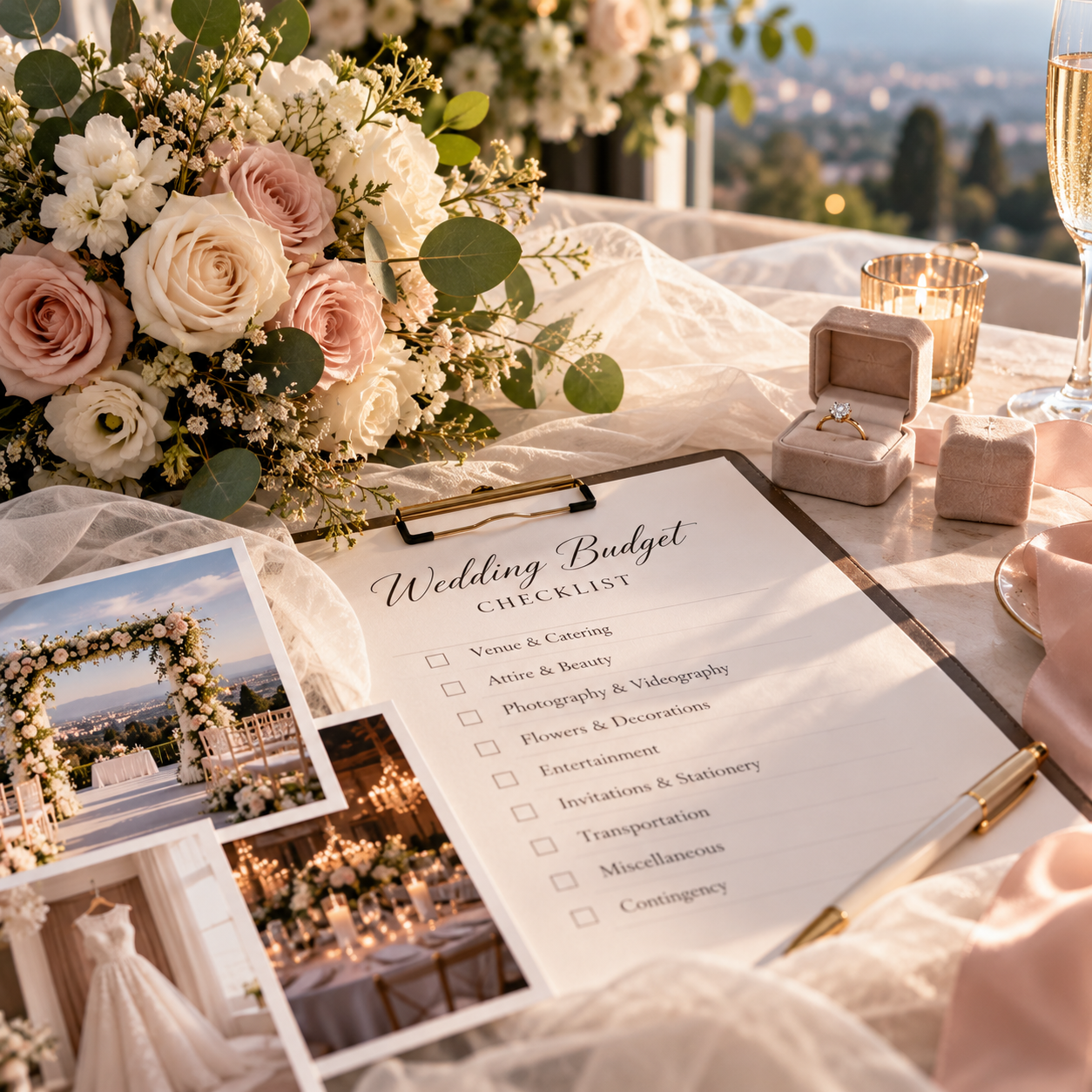
1. Venue and Catering
The venue and food service often account for a significant portion of wedding expenses.
When comparing venues, check whether the quoted price includes tables, chairs, staffing, cleaning, and setup. Some locations offer comprehensive packages, while others charge separately for additional services.
Catering costs usually depend on guest count, menu selection, service style, and beverage arrangements.
2. Wedding Attire and Beauty
Wedding attire includes more than the initial purchase or rental price.
Couples should consider alterations, shoes, accessories, hair styling, makeup, and any additional outfits planned for the celebration.
Scheduling fittings early can help avoid expensive last-minute adjustments.
3. Photography and Videography
Professional photography preserves important moments from the wedding day.
Compare packages based on coverage hours, number of photographers, editing services, delivery timelines, and usage rights.
Choose services based on the coverage you genuinely need rather than automatically purchasing the most expensive package.
4. Flowers and Decorations
Floral arrangements, table settings, ceremony decorations, and lighting contribute to the overall atmosphere.
Seasonal flowers and reusable decorative elements may help control costs. Couples can also focus their decoration budget on areas that will have the greatest visual impact.
5. Entertainment and Music
Entertainment expenses may include a DJ, live band, ceremony musicians, audio equipment, and lighting.
Confirm whether equipment setup, travel, overtime, and breakdown services are included in the vendor’s quotation.
Sample Wedding Budget Breakdown
The following percentages provide an illustrative starting point rather than a fixed industry standard.
| Expense Category | Example Allocation |
|---|---|
| Venue and catering | 40% |
| Photography and videography | 12% |
| Attire and beauty | 10% |
| Flowers and decorations | 10% |
| Entertainment | 8% |
| Planning and coordination | 7% |
| Invitations and stationery | 3% |
| Transportation and miscellaneous | 5% |
| Contingency reserve | 5% |
| Total | 100% |
Couples can adjust these percentages according to their priorities. For example, someone planning an intimate ceremony may allocate less toward catering and more toward photography or their honeymoon.
The most important consideration is keeping the total allocation within the available budget.
How to Create a Realistic Wedding Budget
Set Your Maximum Spending Limit
Start with a total amount that will not interfere with essential living expenses or important financial goals.
Separate confirmed funds from money that may become available later. This creates a more dependable foundation for planning.
Estimate Your Guest Count
Guest count directly influences catering, seating, invitations, favors, and sometimes venue costs.
Prepare an initial guest list before requesting quotations. Even a modest reduction in attendance can affect multiple spending categories.
Compare Vendor Quotes Carefully
Request written quotations from several suitable vendors and compare the services included.
The lowest advertised price is not always the most economical option. Additional charges for delivery, staffing, taxes, gratuities, or overtime may significantly increase the final amount.
For weddings in Los Angeles, confirm whether venue and vendor quotations include applicable taxes, service charges, and location-specific requirements.
Track Deposits and Payment Deadlines
Many wedding vendors require deposits to secure bookings, followed by scheduled payments before the event.
Maintain a simple spreadsheet containing the vendor name, contracted amount, deposit paid, remaining balance, and final payment date.
Review cancellation and refund conditions before signing agreements.
Common Wedding Budget Mistakes to Avoid
One frequent mistake is booking a venue before establishing the overall spending limit. A venue that consumes too much of the budget can leave insufficient funds for catering, photography, and other essentials.
Another problem is overlooking smaller expenses. Vendor meals, transportation, alterations, postage, gratuities, and last-minute supplies can accumulate quickly.
Couples should also avoid making repeated upgrades simply because individual additions appear inexpensive. Several small changes can create a substantial difference in the final total.
Keeping a contingency reserve helps accommodate unexpected expenses without disrupting the entire plan.
Tips for Saving Money Without Sacrificing Quality
A beautiful wedding does not require spending equally across every category. Thoughtful choices can help couples maintain the experience they want while avoiding unnecessary expenses.
Consider these approaches:
-
Choose a guest count that fits your venue and catering budget.
-
Explore weekday or off-peak wedding dates when appropriate.
-
Prioritize a few meaningful decorative elements rather than elaborate arrangements everywhere.
-
Compare bundled services against individually booked vendors.
-
Use digital invitations where suitable.
-
Reuse ceremony decorations during the reception when practical.
Saving money works best when decisions reflect personal priorities rather than following every wedding trend.
Conclusion
A well-organized wedding budget checklist makes wedding planning more manageable by connecting financial decisions with the couple’s priorities. Understanding essential expenses, comparing vendor packages, and tracking payments can reduce unexpected costs throughout the process.
Whether planning a small ceremony or a larger celebration, the key is to establish realistic limits and review spending regularly. With a clear budget, couples can focus on creating meaningful memories while maintaining control over their finances.