
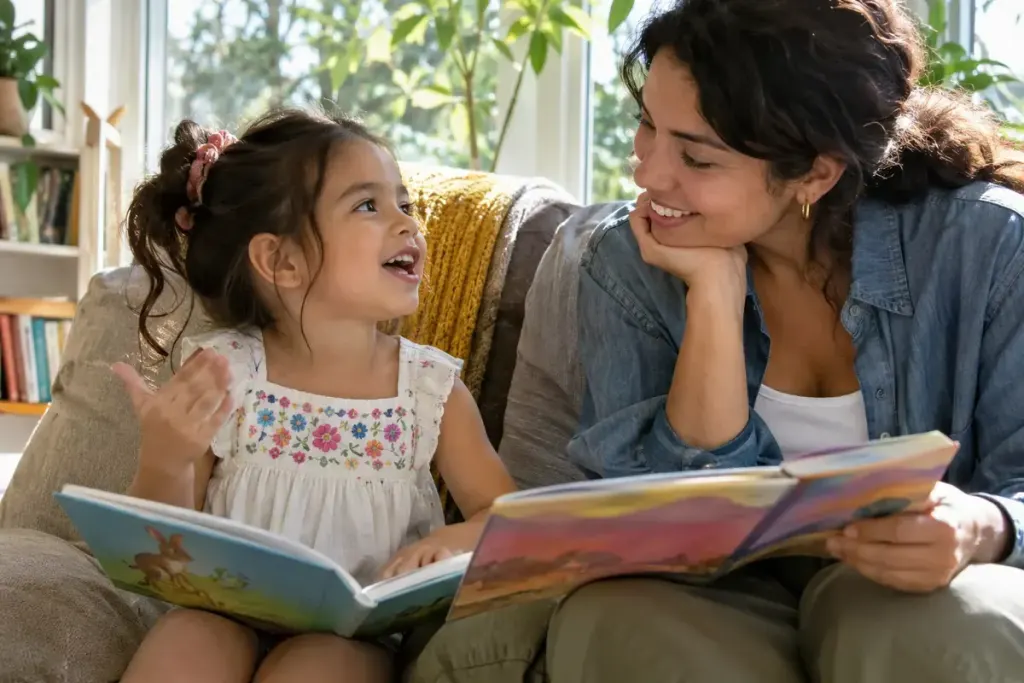
A child begins a sentence in one language and finishes it in another. An adult may worry that the languages are getting muddled, while the child is simply using the words available to tell an interesting story. Listening to the message first changes the conversation.
The American Speech-Language-Hearing Association explains in Learning More Than One Language that mixing words or language patterns can be a normal part of multilingual development. Learning more than one language does not itself cause a speech or language disorder.
Respond before turning the sentence into a lesson
If a child says something equivalent to “I want more juice” using words from two languages, respond to the request. You can naturally model the phrase in the language you are speaking without demanding that the child repeat it correctly before being heard.
Keep conversations enjoyable and meaningful. Talk about the game you are playing, a family photograph or what happened on the way home. A language becomes useful through relationships and activities, not only through vocabulary quizzes.
Different family members may use different languages confidently. Agree on an approach that fits the household rather than treating one rigid arrangement as the only legitimate method. Books, songs and conversations with relatives can provide varied opportunities, but they should not become a test of family loyalty or a reason to shame a child.
If you have concerns about communication, discuss them with a qualified speech-language professional. Explain the child’s experience across all languages and settings, including what they understand and how they communicate with different people. A difficulty should not be dismissed simply because the child is multilingual, nor should language mixing alone be treated as a diagnosis.
A useful family note records examples and context: who was present, which language was used and what the child was trying to communicate. That is more informative than the label “confused”. Above all, make room for the story the child wanted to share.