The ceremony was beautiful.
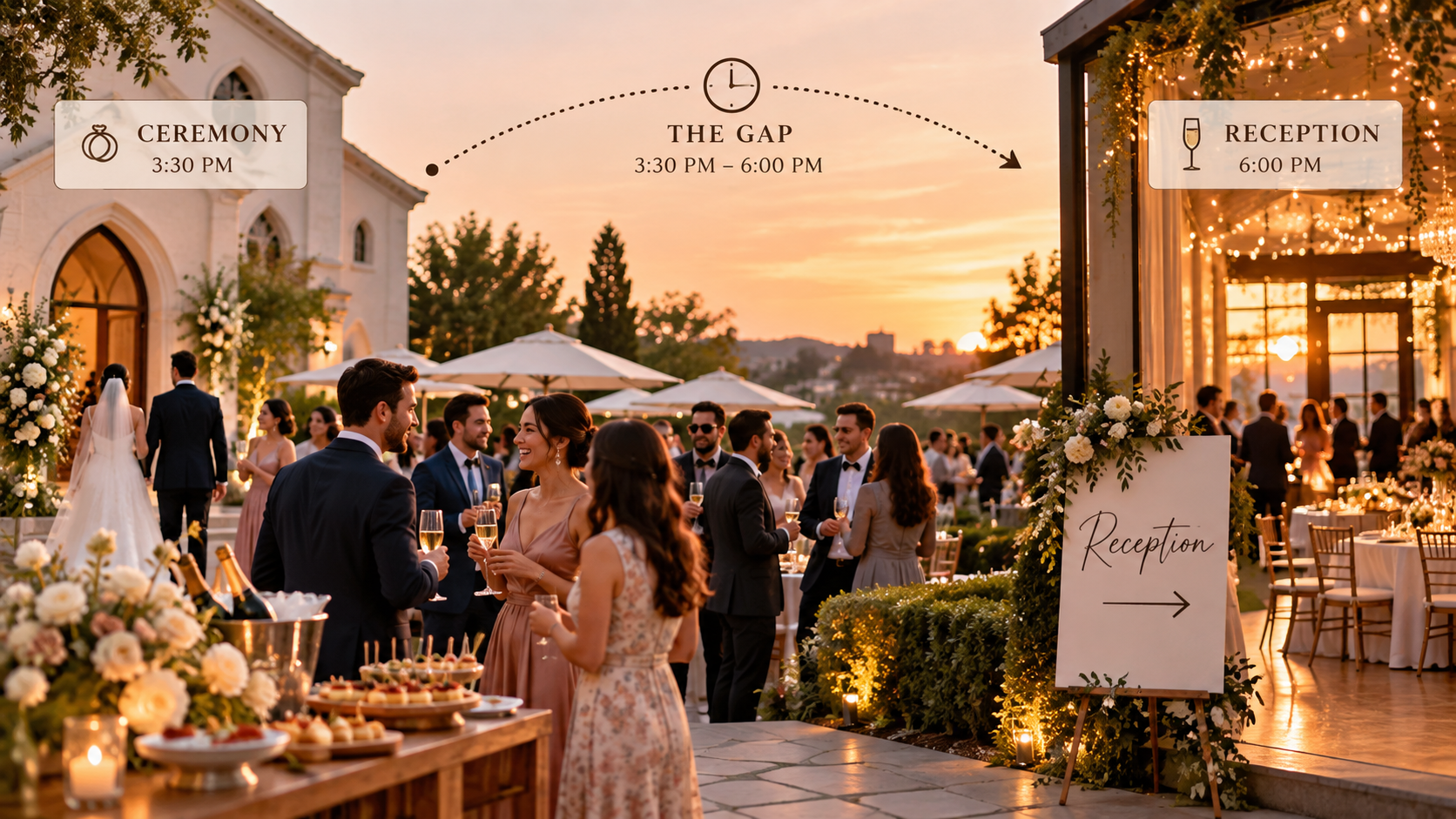
Cocktail hour felt lively.
Guests were talking, taking photos, enjoying drinks, and moving naturally through the venue. Dinner went smoothly, the speeches were heartfelt, and everything seemed to be working exactly as planned.
Then something changed.
Guests remained seated.
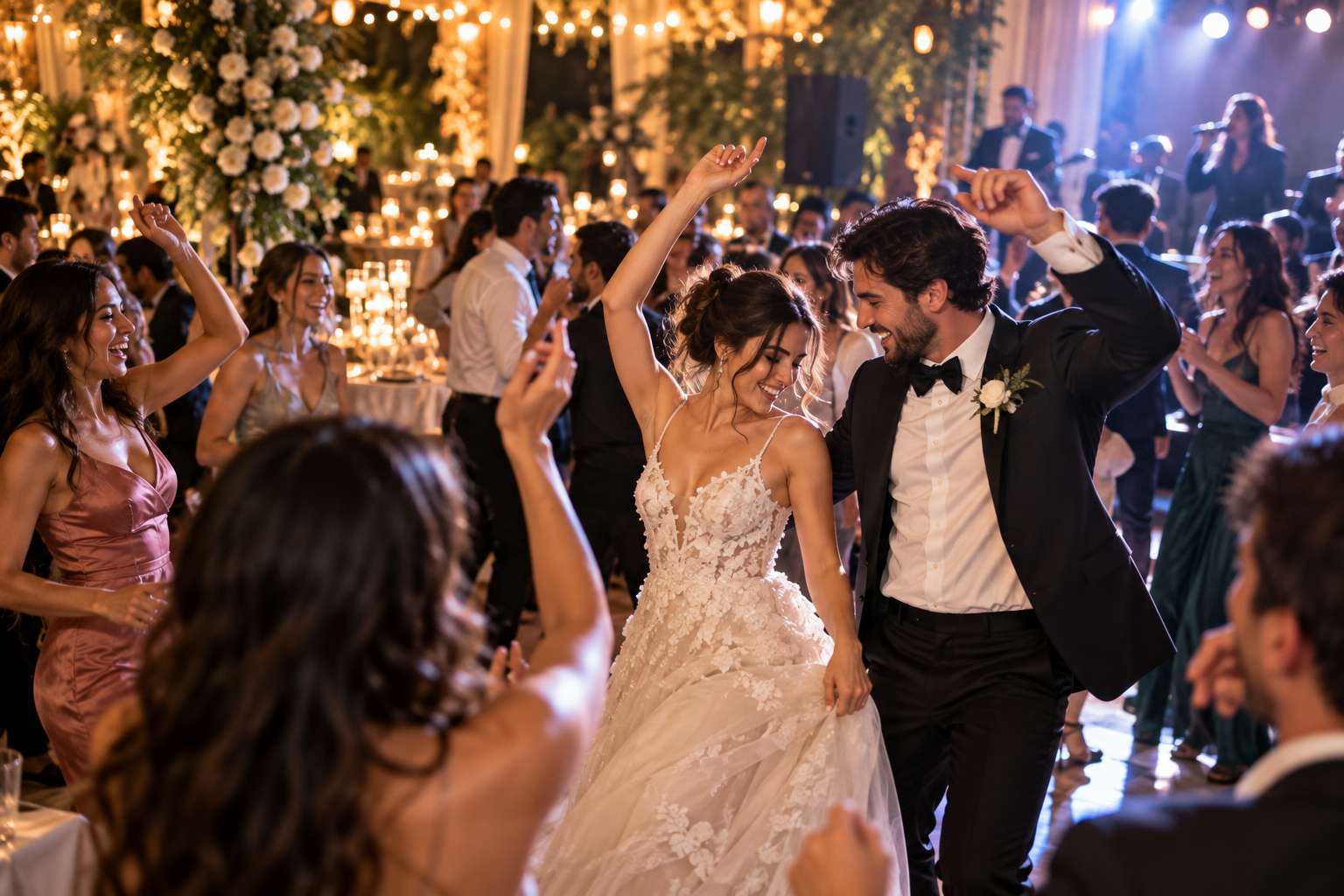
The dance floor stayed almost empty.
Small groups started checking their phones. A few people wandered outside. Older relatives began saying goodbye, and the celebration suddenly felt much quieter than it had an hour earlier.
Nothing necessarily went wrong.
The problem may simply be wedding reception energy.
A reception is not only a collection of activities placed on a timeline. It is a social experience with natural rises and falls in attention, movement, excitement, and participation.
Dinner creates one of the biggest transitions of the entire wedding day.
Understanding what happens immediately afterward can make the difference between a reception that slowly fades and one that naturally builds into the next stage of the celebration.
Dinner Naturally Changes the Mood of a Reception
Before dinner, guests are usually moving.
They arrive.
Find friends.
Visit the bar.
Explore the venue.
Take photographs.
Look for their seats.
Meet people they have not seen recently.
Cocktail hour creates constant small movements and conversations.
Then dinner begins.
Everyone sits down.
The room becomes more structured.
Food arrives.
Conversations become localized around individual tables.
After an hour or more of sitting, eating, drinking, and listening to speeches, the atmosphere naturally becomes calmer.
That is not a failure.
It is simply a different energy state.
The Real Challenge Is Restarting Movement
The question is not whether dinner makes people quieter.
It usually does.
The important question is what happens next.
A strong reception gives guests a clear reason to shift from sitting and watching back into participating.
Without that transition, people often remain in dinner mode.
They finish conversations.
Order another drink.
Check their phones.
Visit the restroom.
Eventually, some begin thinking about leaving.
The celebration does not necessarily end because guests are bored.
Sometimes nobody has given them a strong enough cue that the next part has begun.
A Timeline Can Be Technically Correct and Still Feel Flat
Wedding planning often focuses heavily on timing.
Dinner at 7:00.
Speeches at 8:00.
Cake at 8:30.
First dance at 8:45.
Open dancing at 9:00.
On paper, everything looks organized.
But a reception is experienced emotionally, not as a spreadsheet.
Two activities scheduled five minutes apart can feel disconnected if the transition between them is weak.
Meanwhile, several moments can happen quickly and still feel natural if they build on one another.
This is why wedding reception energy depends on more than simply staying on schedule.
Too Many Seated Activities Can Drain Momentum
Dinner already asks guests to remain seated.
Now add several speeches.
Then a slideshow.
Then another speech.
Then a video.
Then cake cutting somewhere across the room.
Then another announcement.
Individually, each activity may be meaningful.
Together, they can create a long stretch where guests remain passive.
Eventually, the reception starts feeling like a presentation.
This is especially risky when the couple hopes to transition directly into a lively dance party afterward.
Guests Need Changes in Pace
Good events usually contain contrast.
Movement followed by rest.
Conversation followed by entertainment.
Emotion followed by celebration.
Structured moments followed by freedom.
If every part of the evening has the same pace, attention begins to decline.
Dinner provides a natural slower section.
The period after dinner can then create a noticeable shift.
That contrast helps the evening feel dynamic.
Speeches Have More Impact When They Are Focused
Wedding speeches can become some of the most memorable moments of the reception.
They can also become one of the longest stationary portions of the evening.
The issue is rarely the existence of speeches.
It is usually the accumulation.
If several people speak for longer than expected, a planned fifteen-minute segment can quietly become forty minutes.
Guests may still be respectful and attentive, but the atmosphere changes.
By the time the final speaker finishes, rebuilding momentum becomes more difficult.
Coordinate Speakers Before the Wedding
People giving speeches should understand approximately how much time they have.
This does not mean making every toast rigid or emotionless.
It simply helps protect the overall flow.
A person who expects to speak for three to five minutes will prepare differently from someone who assumes there is no limit.
The planner, coordinator, DJ, or MC should also know who is speaking and in what order.
That reduces awkward pauses between speakers.
Avoid Long Dead Spaces Between Formalities
Imagine the final speech ends.
Everyone applauds.
Then nothing happens.
The DJ is waiting for instructions.
The photographer is looking for the couple.
The cake knife has disappeared.
The coordinator is speaking with catering staff.
Guests sit quietly wondering what comes next.
Even a short delay can feel much longer when the entire room is waiting.
Transitions should be prepared before the previous activity ends whenever possible.
The MC Plays an Important Role in Maintaining Flow
A good MC does more than announce names.
They help guests understand what is happening.
Where should people look?
Should they remain seated?
Should they move toward the dance floor?
Is the bar reopening?
Is dessert being served?
Are guests invited to join something?
Clear communication reduces hesitation.
Guests participate more easily when they understand what is expected.
Announcements Should Be Short and Clear
A wedding reception does not need constant commentary.
Too many announcements can interrupt conversations and make the evening feel over-managed.
The best announcements usually provide useful information and create movement.
For example, transitioning guests toward the dance floor should feel inviting rather than like another formal instruction.
The objective is to guide the room without making guests feel controlled.
The Couple Sets the Social Temperature
Guests watch the newlyweds.
If the couple remains seated in a corner after dinner, many guests may continue doing the same.
If the couple moves into the next part of the celebration with visible enthusiasm, guests receive a social cue.
This is especially important around dancing.
People are often reluctant to become the first person on an empty dance floor.
They feel much more comfortable joining once the couple and a few familiar guests are already there.
An Empty Dance Floor Is Psychologically Difficult
Imagine a large illuminated dance floor.
Music starts.
Everyone can see it.
Nobody is standing on it.
Being the first person to walk into that empty space requires confidence.
Many guests would rather wait.
Unfortunately, everyone may be waiting for everyone else.
This creates a strange situation where plenty of people are willing to dance, but nobody wants to begin.
The solution is to make the transition feel natural rather than asking guests to suddenly occupy an empty floor.
The First Dance Can Become a Bridge
The first dance is not only a romantic tradition.
From an event-flow perspective, it can also help transition the room.
Guests turn their attention toward the dance floor.
The couple occupies the space.
Photography is already focused there.
Music becomes central.
From that point, additional dances or an invitation to join can move guests onto the floor without requiring them to make the first move.
Placement within the timeline therefore matters.
Parent Dances Can Continue the Transition
Parent dances can add another emotional moment.
But they should be considered within the overall pacing.
If they happen alongside several speeches, videos, and other formalities, the seated portion of the reception can become very long.
If they are used strategically around the dance-floor transition, they can help direct attention toward the next phase.
There is no universal order that every wedding must follow.
The sequence should support the desired atmosphere.
Open Dancing Needs a Strong Beginning
Simply announcing “the dance floor is now open” may not be enough.
The first few songs matter.
They establish the atmosphere.
A DJ or band should understand the guest mix and the couple’s musical preferences.
The objective is not necessarily to play the couple’s favorite obscure song immediately.
It is to find music capable of creating participation.
Once people are moving, the musical range can expand.
Music Should Match the People in the Room
A wedding can include several generations.
Grandparents.
Parents.
Friends from college.
Coworkers.
Children.
Cousins.
Each group may respond to different music.
A skilled DJ or band reads the room rather than treating the playlist as an inflexible sequence.
A song that works perfectly at one wedding may empty the floor at another.
Guest demographics matter.
A Playlist Is Different From Live Room Management
Couples often spend considerable time building playlists.
That can be useful for communicating taste.
But a reception is happening in real time.
People react.
Energy changes.
Some songs unexpectedly work.
Others do not.
A professional DJ or bandleader can respond to those changes.
The playlist provides direction.
The room provides feedback.
Both matter.
Do Not Make Guests Wait Too Long for Dancing
If the invitation communicates a lively evening reception, guests often expect dancing to become part of the experience.
When open dancing begins very late, some guests may already be tired.
Older relatives may have left.
Parents with children may be preparing to leave.
Guests who traveled far may have an early departure planned.
Starting the social portion at the right point helps more people participate.
Dinner Service Length Affects Everything After It
Reception energy cannot be separated from catering logistics.
If dinner takes significantly longer than expected, everything after it shifts.
Speeches begin later.
Cake happens later.
Dancing begins later.
The couple has less time with guests.
A service delay of thirty minutes can have a much larger effect than simply moving one timeline item by thirty minutes.
It compresses the remaining celebration.
Guest Count Influences Dinner Timing
Serving fifty guests is different from serving two hundred.
The service style matters too.
Plated dinner.
Buffet.
Family style.
Food stations.
Each creates different movement and timing.
Venue layout and staffing also affect how efficiently guests receive food.
Dinner timing should therefore be based on the actual reception plan rather than copied from a generic wedding timeline.
Buffet Lines Can Change the Atmosphere
Buffets naturally create movement.
But they can also create long waiting periods if guest release is poorly managed.
If everyone stands at once, the line becomes crowded.
If tables are released too slowly, the final tables may finish eating much later than the first.
That makes it difficult to move the entire room into speeches or dancing together.
Coordination between catering and the event team is essential.
Dessert Does Not Always Need to Stop the Party
Traditional timelines sometimes treat cake cutting as a major event requiring everyone to stop and watch.
That can work.
But depending on the wedding style, dessert can also be integrated more casually.
If dancing has already developed strong momentum, completely stopping the music and asking everyone to sit again may reset the room.
Consider whether the cake moment needs full-room attention or whether it can happen without interrupting the celebration.
Every Interruption Has an Energy Cost
Once people are dancing, socializing, and enjoying themselves, stopping the room should have a clear purpose.
Imagine this sequence:
Dance for twenty minutes.
Stop for cake.
Dance again.
Stop for bouquet toss.
Dance again.
Stop for another announcement.
Each restart requires effort.
Some traditions are important to the couple and absolutely worth including.
The point is not to remove them all.
It is to arrange them intentionally.
Group Formalities When Appropriate
Instead of scattering formal moments throughout the evening, some weddings benefit from grouping them.
For example, dinner may lead into speeches and selected formalities before the reception transitions decisively into dancing.
Once the party begins, interruptions can be minimized.
This creates a clearer progression:
Welcome.
Dinner.
Formal moments.
Celebration.
The exact structure should reflect the couple’s priorities.
Too Many Traditions Can Make the Reception Feel Programmed
Weddings come with many possible traditions.
First dance.
Parent dances.
Cake cutting.
Bouquet toss.
Garter traditions.
Games.
Anniversary dance.
Group photographs.
Special performances.
Cultural rituals.
None are automatically required.
If every possible tradition is included simply because “weddings are supposed to have it,” the evening can become crowded with programming.
Choose moments that actually mean something to the couple.
Cultural Traditions Should Have Space to Breathe
For many families, cultural or religious reception traditions are central to the celebration.
These should not be treated as obstacles to dancing or timeline efficiency.
Instead, the timeline should be designed around their importance.
Give meaningful traditions enough space.
Explain unfamiliar moments to guests when appropriate.
Then build transitions around them.
Good pacing does not mean making everything fast.
It means giving each moment the right amount of attention.
The Bar Can Influence Movement
Bar placement affects how guests move through the venue.
If the bar is located far away from the dance floor, guests may repeatedly leave the main celebration area.
They get a drink.
See friends.
Start another conversation.
Remain there.
Eventually a secondary social area develops away from the dance floor.
This is not always bad.
But if dancing is a major priority, the physical layout should support it.
Avoid Creating Competing Party Zones by Accident
A beautiful outdoor patio can become extremely popular.
So can a lounge area.
Firepit.
Photo booth.
Dessert station.
Smoking area.
Late-night food station.
Each feature gives guests another place to spend time.
That can improve the overall experience.
But if all of them are located far from the central reception, the crowd may become fragmented.
Instead of one energetic party, you have six small groups scattered around the venue.
Think About Guest Flow, Not Just Decoration
A floor plan can look beautiful from above.
That does not guarantee it functions well.
Consider how guests move between:
Tables.
Bar.
Restrooms.
Dance floor.
Photo booth.
Outdoor areas.
Dessert.
Exits.
If major attractions pull guests in opposite directions, energy disperses.
Good design supports natural movement toward the areas where you want activity to happen.
Lighting Can Signal That the Reception Has Changed
Lighting affects atmosphere.
Dinner may use warm, comfortable illumination.
When dancing begins, changing the lighting can communicate that the evening has entered a new phase.
The shift does not need to be dramatic.
Even subtle changes can alter how the room feels.
Guests respond not only to announcements but also to environmental cues.
A Room That Is Too Bright Can Affect the Dance Floor
Many people feel more self-conscious dancing in a brightly illuminated ballroom.
Reducing general lighting while keeping important areas safely visible can make the environment feel more inviting.
Of course, safety still matters.
Walkways, stairs, exits, and other important areas must remain appropriately illuminated.
Atmosphere should never come at the expense of safe movement.
A Dance Floor Can Be Too Large
Couples often assume a larger dance floor is better.
But an oversized dance floor can make a healthy crowd look sparse.
Thirty people dancing in a compact area can feel energetic.
The same thirty people spread across an enormous ballroom floor can look empty.
Perceived density influences atmosphere.
Choose a dance-floor size appropriate to expected participation rather than simply maximizing square footage.
Tables Should Not Feel Disconnected From the Celebration
If guest tables are placed very far from the dance floor, people sitting down may feel separated from the party.
This can make it harder for them to rejoin.
Ideally, even guests who are resting can still feel connected to the central activity.
They can watch.
Hear the music.
See friends dancing.
Then return when they are ready.
Older Guests Need Comfortable Alternatives
Maintaining wedding reception energy does not mean forcing everyone to dance.
A successful reception accommodates different ways of participating.
Some guests want to dance for hours.
Others prefer conversation.
Older relatives may enjoy watching from comfortable seating.
Some guests need quieter spaces.
The goal is to create options while keeping the overall celebration connected.
Children Can Affect Reception Dynamics
If children are invited, their needs may influence the evening.
Young children may become tired after dinner.
Parents may need to leave earlier.
Others may spend time supervising children rather than dancing.
Depending on the wedding, a designated children’s activity area or thoughtful seating arrangement can help families participate more comfortably.
The right solution depends on the guest list.
The Couple Should Actually Be Present
This sounds obvious.
But wedding days involve many demands on the couple.
Golden-hour portraits.
Outfit changes.
Private moments.
Vendor discussions.
Family photos.
Traditions.
If the couple disappears for a long period just as dancing is supposed to begin, guests may hesitate to start without them.
Photography and other activities should be coordinated with the reception flow.
Golden-Hour Photos Need Strategic Timing
Sunset portraits can produce beautiful photographs.
But sunset does not care about the wedding timeline.
If the couple leaves during a critical reception transition, the room may lose its social anchor.
Discuss timing with the photographer and planner beforehand.
Perhaps portraits can happen during a naturally quieter period.
The goal is to get meaningful photos without unintentionally draining the reception.
Guests Copy Other Guests
Social behavior spreads quickly.
When several enthusiastic guests begin dancing, others often join.
When everyone remains seated, people become more hesitant.
This is why a small group of energetic friends or relatives can be valuable during the transition.
The couple does not need to manufacture excitement.
They simply need enough participation to remove the awkwardness of being first.
Seat Your Most Social Guests Strategically
Seating plans usually focus on relationships.
Who knows whom?
Who should not sit together?
Who needs accessibility considerations?
Those factors are important.
But you can also consider social energy.
If the couple’s most enthusiastic friends are seated near the dance floor, they can move into the party quickly.
If they are hidden behind several rows of tables, the transition may take longer.
Alcohol Is Not a Substitute for Event Flow
A bar can contribute to a celebratory atmosphere.
But alcohol does not automatically create a good reception.
Guests should never feel pressured to drink in order to participate.
A strong event should work for people who drink and people who do not.
Music, social connection, pacing, layout, lighting, and hospitality matter independently of alcohol.
Provide appealing non-alcoholic options as part of the guest experience.
Late-Night Food Can Create Another Energy Peak
Several hours after dinner, guests may become hungry again.
A late-night snack can create a fun secondary moment.
Pizza.
Sliders.
Tacos.
Fries.
Local favorites.
Or something meaningful to the couple.
The specific food matters less than timing and presentation.
Introduced at the right moment, late-night food can refresh guests without completely stopping the party.
Do Not Serve Late-Night Food Too Early
If dinner ended recently, another food service may have little effect.
If it arrives near the point where energy naturally begins to decline, it can feel exciting.
Guests take a short break.
Eat.
Talk.
Then return to dancing.
Timing turns a simple snack into part of the reception experience.
Photo Booth Timing Matters Too
A photo booth can be a great activity.
But if it opens exactly when you want everyone on the dance floor, it creates competition.
Consider opening it earlier during cocktail hour or keeping it available for a broad window.
That way, guests do not feel they must choose between the first major dance set and taking photos.
Every attraction should fit into the larger flow.
Do Not Schedule Everything at Once
After dinner, couples sometimes want to activate every feature simultaneously.
Dance floor opens.
Dessert station opens.
Photo booth opens.
Coffee bar opens.
Outdoor lounge opens.
Late-night entertainment begins.
Now guests scatter.
Each activity may be excellent individually.
Together, they divide attention.
Staggering experiences can help the reception continue revealing something new throughout the evening.
Surprise Works Better When the Basics Already Work
A surprise performance or entertainment element can create a memorable moment.
But it cannot permanently rescue a reception with poor flow.
If guests are confused, dinner ran extremely late, and the dance floor is disconnected from the room, a ten-minute performance only creates a temporary spike.
Get the fundamentals right first.
Then special moments become enhancements rather than emergency solutions.
Live Entertainment Needs Coordination
Bands, dancers, cultural performers, musicians, and other entertainers need to understand their role in the timeline.
Where do they enter?
How long is the performance?
What happens immediately afterward?
Does the DJ resume music?
Are guests invited onto the floor?
A performance with no transition afterward can create another dead space.
Plan what happens after the applause.
The DJ and Coordinator Need to Communicate
A reception runs more smoothly when key vendors share information.
If dinner is fifteen minutes behind, the DJ needs to know.
If the photographer needs five more minutes with the couple, the coordinator should know.
If speeches are being shortened, catering may need updated timing.
The reception is an interconnected system.
One vendor cannot maintain the flow alone.
Avoid Building a Timeline With Zero Flexibility
Real weddings rarely operate to the exact minute.
A guest may need assistance.
Dinner service may take longer.
A speech may run over.
The couple may need a moment.
Weather may change an outdoor plan.
A strong timeline includes enough flexibility to absorb small delays without collapsing.
The objective is controlled adaptability.
Protect the Moments That Matter Most
When the timeline falls behind, not everything deserves equal protection.
Before the wedding, identify priorities.
Maybe the couple cares most about:
Dinner with family.
A particular cultural tradition.
Sunset portraits.
Dancing.
A private last dance.
If time becomes limited, lower-priority elements can be shortened or adjusted while important experiences remain intact.
Without priorities, every delay becomes stressful.
Consider the Age and Lifestyle of Your Guests
A reception beginning at 10:00 p.m. may work perfectly for one guest list and poorly for another.
If many guests have young children or are older relatives, waiting until very late to begin dancing may reduce participation.
Likewise, a young crowd accustomed to late nights may happily continue much longer.
There is no universally correct party schedule.
Design the evening for the people actually attending.
Travel Can Affect Guest Energy
Destination weddings and weddings with many out-of-town guests introduce another factor.
Guests may have traveled that day.
They may be dealing with time-zone changes.
They may have attended welcome events the previous night.
A schedule that assumes everyone has unlimited energy may not reflect reality.
Hospitality includes recognizing the physical experience of the guests.
Weather Can Change Reception Energy
Outdoor weddings are especially sensitive to environmental conditions.
Heat can exhaust guests.
Cold can keep people seated.
Humidity can make dancing uncomfortable.
Wind can affect sound and décor.
If part of the reception is outdoors, have a plan for guest comfort.
Shade, heating, airflow, water, and indoor alternatives can influence how long guests remain engaged.
Comfortable Guests Stay Longer
Reception energy is not only entertainment.
Basic comfort matters.
Are there enough restrooms?
Is water easy to access?
Are seats comfortable?
Is the room excessively hot?
Can guests hear conversations during dinner?
Is the music painfully loud everywhere?
Are lines too long?
Guests who are physically uncomfortable are less likely to remain engaged no matter how beautiful the event looks.
Sound Levels Should Change With the Evening
Dinner music and dance music serve different purposes.
During dinner, guests usually want to converse.
If music is too loud, conversation becomes tiring.
Later, the dance floor needs stronger sound.
A good audio setup allows the atmosphere to change without making the entire venue equally loud.
Speaker placement and venue acoustics matter.
Energy Does Not Mean Maximum Volume
A louder reception is not automatically a better reception.
Energy comes from participation.
Twenty guests enthusiastically singing and dancing can create more excitement than a room where extremely loud music prevents everyone from interacting.
The sound system should support the experience.
It should not become the experience.
Give Guests Time to Talk
Weddings bring together people who may not have seen one another for years.
Conversation is part of the celebration.
Do not treat every moment where guests are talking instead of dancing as a failure.
The goal is balance.
A strong reception can include a busy dance floor and lively conversations happening nearby.
Energy takes different forms.
Watch the Room Instead of Obeying the Timeline Blindly
Suppose the dance floor is packed.
Everyone is enjoying themselves.
The timeline says cake cutting should happen immediately.
Does it need to happen that exact minute?
Perhaps not.
Experienced event professionals can sometimes adjust timing slightly to protect a strong moment.
A timeline is a tool.
It should support the celebration, not fight it.
Know When to Change the Plan
Flexibility becomes especially valuable when reality differs from expectations.
Maybe guests begin dancing earlier.
Maybe dinner finishes faster.
Maybe everyone is outside enjoying sunset.
Maybe a cultural performance creates an unexpected burst of energy.
Good coordination responds to what is actually happening.
The plan provides structure.
Observation provides judgment.
A Strong Ending Matters
Reception planning often focuses heavily on the entrance and first dance.
But endings matter too.
If the event slowly empties until only a handful of guests remain and nobody knows whether the reception is finished, the final memory can feel anticlimactic.
Consider how the evening will conclude.
A final song.
Private last dance.
Formal send-off.
Or simply a clearly communicated closing.
The ending should fit the couple’s style.
Do Not Wait Until Almost Everyone Leaves to End the Party
There is value in ending while some energy remains.
A strong final song with a healthy group of guests can create a memorable shared moment.
Waiting until the dance floor is nearly empty may produce a less satisfying finish.
This does not mean forcing people out early.
It means understanding the natural arc of the event.
A Private Last Dance Creates a Different Mood
Some couples choose to have guests prepare for the send-off while they remain inside for one final private dance.
This can create a quiet contrast after a highly social day.
It also gives the couple a few minutes to experience the reception space together.
Whether this fits depends on the wedding.
Like every tradition, it should be chosen because it feels meaningful rather than because it appears on a checklist.
Good Reception Energy Is Designed, Not Forced
You cannot command guests to have fun.
You can create conditions that make participation easier.
A comfortable environment.
Clear transitions.
Good music.
Thoughtful lighting.
Reasonable timing.
Accessible food and drinks.
A layout that keeps people connected.
Enough structure to avoid confusion.
Enough freedom for guests to enjoy themselves naturally.
That is the foundation of wedding reception energy.
The Goal Is Not a Packed Dance Floor at Every Second
Not every couple wants a nightclub-style wedding.
Some prefer an elegant dinner with conversation.
Others want games.
Live music.
A relaxed garden reception.
A cultural celebration.
A huge dance party.
Reception energy should match the desired experience.
The important question is whether the atmosphere feels intentional.
A quiet moment can be beautiful when it is supposed to be quiet.
The problem is when the room feels flat during a moment intended to feel celebratory.
Build the Evening as an Experience
Instead of asking only:
“What activities should we include?”
Ask:
“How should guests feel throughout the evening?”
Welcomed.
Relaxed.
Connected.
Moved.
Excited.
Celebratory.
Then consider which parts of the timeline create those feelings.
This changes wedding planning from arranging tasks to designing an experience.
Conclusion
When wedding reception energy drops after dinner, the problem is rarely that guests suddenly decided they no longer want to celebrate.
Dinner naturally slows the room.
Guests sit down, eat, talk, listen to speeches, and settle into a quieter rhythm.
The challenge is creating a clear transition out of that rhythm.
Long stretches of seated formalities, awkward pauses, an empty dance floor, poor room layout, competing activities, late timing, and repeated interruptions can all make that transition more difficult.
Instead, think about the reception as a series of connected energy changes.
Let dinner be relaxed.
Keep speeches focused.
Prepare the next activity before the previous one ends.
Use the couple, music, lighting, and clear communication to move attention toward the dance floor.
Avoid interrupting strong momentum without a good reason.
Most importantly, design the reception around the people who will actually be there.
A memorable wedding does not need guests dancing every second.
It needs flow.
When each part of the evening naturally leads into the next, guests rarely stop to think about the timeline.
They simply feel like the celebration never lost its rhythm.